Overview
Bhrigu Lake — Manali's Fastest Route to a Sacred 14,100 ft Tarn
Bhrigu Lake at 14,100 ft (4,300 m) is the fastest, cleanest way to touch high altitude from a Manali base. Across four days the trail walks you out of the road-head village of Gulaba (10,200 ft), climbs through the rolling meadows of Rola Kholi, and arrives at a small glacial tarn that local Pahari tradition holds as the meditation seat of Maharishi Bhrigu — one of the seven great seers (saptarshis) of Vedic mythology. Despite the modest length, the trek delivers Pir Panjal panoramas, monumental open meadows, and a high-altitude lake that freezes solid for seven months of the year. It is the textbook moderate first high-altitude trek for trekkers based in Delhi or Chandigarh.
The geography of the lake
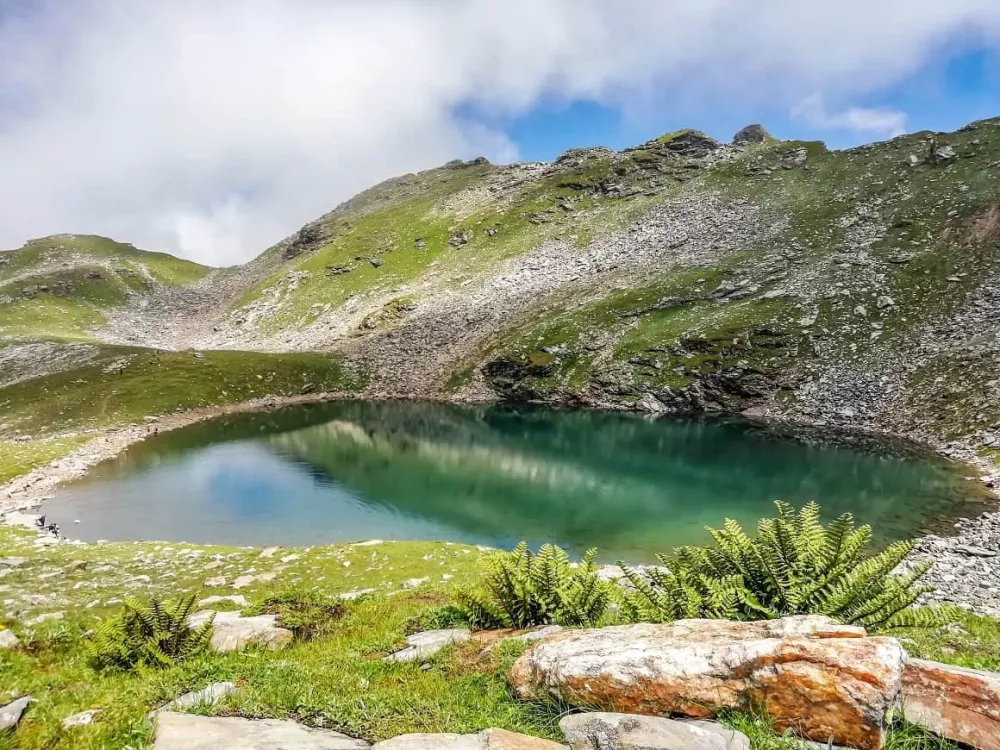
Bhrigu Lake sits in a small glacial cirque on the eastern flank of the Pir Panjal range, just south of the main Manali-Rohtang ridgeline. The lake basin was carved by a small hanging glacier that retreated about 8,000 years ago, leaving behind a moraine dam that traps snowmelt from the surrounding 16,000 ft peaks. The water is roughly the size of a football field and rarely deeper than four metres; in clear summer light it shows a deep aquamarine tint typical of glacier-fed lakes with low organic content. Ringing the basin are unnamed peaks topping out at 16,500 ft, and to the south-west a clear gap in the ridge frames the white wall of Hanuman Tibba (19,450 ft) and Indrasan (20,410 ft).
The route from Gulaba
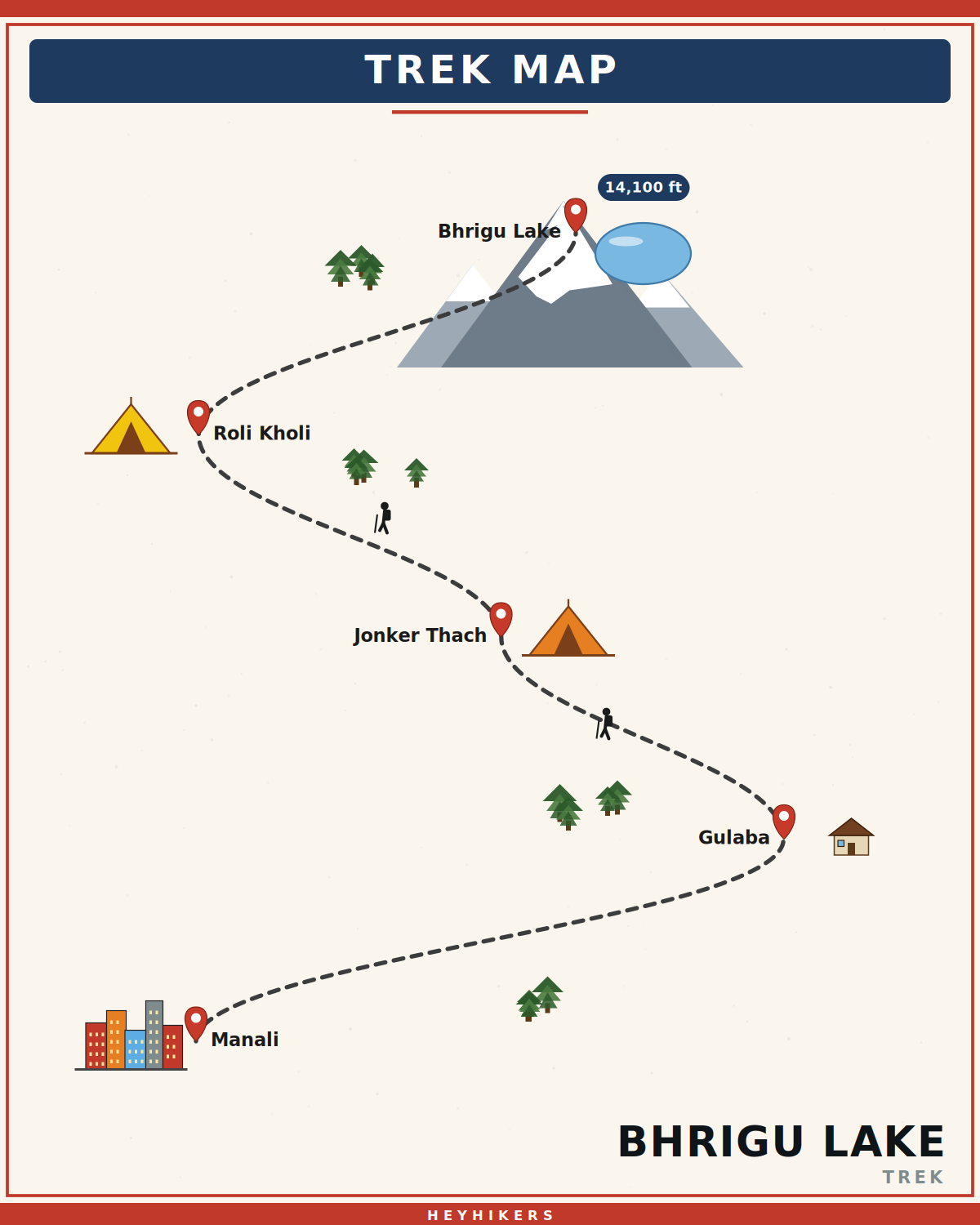
The trek begins at Gulaba, a small wayside settlement on the Manali-Rohtang highway, 22 km from town. Day 1 climbs through silver oak and Himalayan pine to Jonker Thach (11,000 ft), a wide grassy meadow where Gaddi shepherds graze sheep in summer. Day 2 is the longest single day — a steady climb across rolling meadows to Rola Kholi camp (12,500 ft), named for the small glacier-melt stream (kholi) that runs through it. Day 3 is the summit-day push: a 4 AM start, three hours of moraine-and-snow climbing to the lake, and the return to Rola Kholi. Day 4 descends the same route to Gulaba.
The lake itself
You see the lake only in the final 100 metres — it sits in a bowl that hides it until you crest the ridge. In the May-early-June window the surface is still frozen and the surrounding meadow is splashed with snow patches. Late June through September the lake surface thaws, the meadow turns emerald green, and clusters of Himalayan blue poppy (Meconopsis aculeata) bloom along the edges. Pilgrims tie small fragments of red cloth on the cairns at the lake-side; trekkers traditionally walk a clockwise parikrama around the water before descending.
Best season and weather
Bhrigu Lake runs from mid-May to mid-October with two distinct windows. The May-June window has snow patches at the lake and a frozen surface — visually striking but cold (-5°C at Rola Kholi at night). July-August sees monsoon rain on the Pir Panjal side; the upper meadow becomes lush but views are often clouded. September-October is the photographic prime: clear skies, golden meadow grass, and unobstructed views of the Pir Panjal wall. The lake re-freezes by late October.
Camping and infrastructure
HeyHikers operates two-person tents, -10°C sleeping bags, a communal mess tent, and dry pit toilets at Jonker Thach and Rola Kholi. The Day 0 night is in a comfortable Manali guesthouse. Mules carry the bulk gear to Rola Kholi; trekkers carry only daypacks of 5-7 kg. Mobile network covers Gulaba and Jonker Thach (Jio and BSNL); Rola Kholi and the lake are out of network. Drinking water is sourced from the Rola Kholi stream and boiled at camp.
Who this trek is for
Bhrigu is the textbook first high-altitude (above 14,000 ft) trek. We accept trekkers as young as 12 (with parental consent) and as old as 60 with reasonable cardiovascular fitness — defined as the ability to run 4 km in 30 minutes. The trek does not require prior Himalayan experience, but a one-day fitness hike (Triund, Nag Tibba) within the previous month is strongly recommended. The pass-day push covers 12 km of mixed meadow and moraine and is the only physically demanding day; the rest of the trek is comfortable.
Cultural context
Maharishi Bhrigu is one of the seven seers of Hindu cosmology and is credited with composing the Bhrigu Samhita, an ancient Sanskrit astrological text. Local Pahari villagers from Vashisht and Old Manali still climb to the lake for an annual puja in late August. The trail passes a small wooden Bhrigu shrine at Jonker Thach where devotees tie red ribbons; the shrine is unattended but always has fresh offerings of marigold and incense.
Itinerary
Map
What trekkers say
"I'd never camped in snow before. The HeyHikers team made me feel safe every single step. The summit sunrise — standing at 12,500 ft watching peaks turn gold — I cried. Not from the cold. From the beauty."
PS
Priya Sharma
Kedarkantha, Dec 2025
"Seven lakes, each more unreal than the last. The logistics were flawless — the food at 13,000 ft was better than most restaurants I know. Our guide Farooq knew every stone on the trail. Doing Goechala with them next."
AM
Arjun Mehta
Kashmir Great Lakes, Aug 2025
Inclusion
- All meals during the trek (vegetarian, freshly cooked)
- Camping gear — tents, sleeping bags, mats
- Certified trek leader and support guides
- Forest department permits and entry fees
- First-aid kit and supplemental oxygen
- Basecamp accommodation on twin/triple sharing
Exclusion
- Travel to and from the basecamp pickup point
- Personal trekking gear and clothing
- Travel insurance covering high-altitude trekking
- Tips, personal expenses, and meals during travel days
- Anything not explicitly listed under inclusions
Things to Carry
- Trekking shoes (high-ankle, broken-in)
- 40-50L backpack with rain cover
- Two pairs of trek pants
- Three full-sleeve t-shirts (synthetic, not cotton)
- Fleece jacket and a heavier down/insulated jacket
- Thermal innerwear (top + bottom)
- Waterproof outer shell (jacket + pants)
- Woollen cap, sun cap, balaclava
- Two pairs of warm gloves (inner liner + outer)
- UV-rated sunglasses
- Headlamp with spare batteries
- Reusable water bottles (2L total) or hydration bladder
- Personal medical kit and prescription medicines
- Sunscreen (SPF 50+) and lip balm
- Toiletries and quick-dry towel
- Original photo ID (mandatory at forest checkposts)
How to Reach
Reach Manali by overnight Volvo from Delhi or by air to Bhuntar. Our team picks you up from Old Manali at 9:00 AM on Day 1 and drives 30 minutes to Gulaba where the trek begins.
Safety & Security
- Acclimatize properly — never skip rest days at altitude.
- Drink at least 4 litres of water per day above 9,000 ft.
- Tell your trek leader immediately if you feel headache, nausea, or breathlessness — early AMS signs are treatable, ignored ones are not.
- Stay close to the group; do not take shortcuts off the marked trail.
- Avoid alcohol and smoking for the entire duration of the trek.
- Keep a buffer day for travel — Himalayan roads can close without notice.
- Carry travel insurance that explicitly covers high-altitude trekking and helicopter evacuation.
Cancellation Policy
Cancellations must be requested in writing.
- More than 30 days before the trek start date: 90% refund. - 21–30 days before: 50% refund. - 11–20 days before: 25% refund. - 10 days or fewer: no refund, but you may transfer your slot to another trekker or to any future batch within 12 months at no extra charge.
Refunds are processed to the original payment method within 7-10 working days. Trip cancellations triggered by us (weather, force majeure, government restrictions) are refunded in full or moved to an alternate batch at your option.
Meet your trek leader
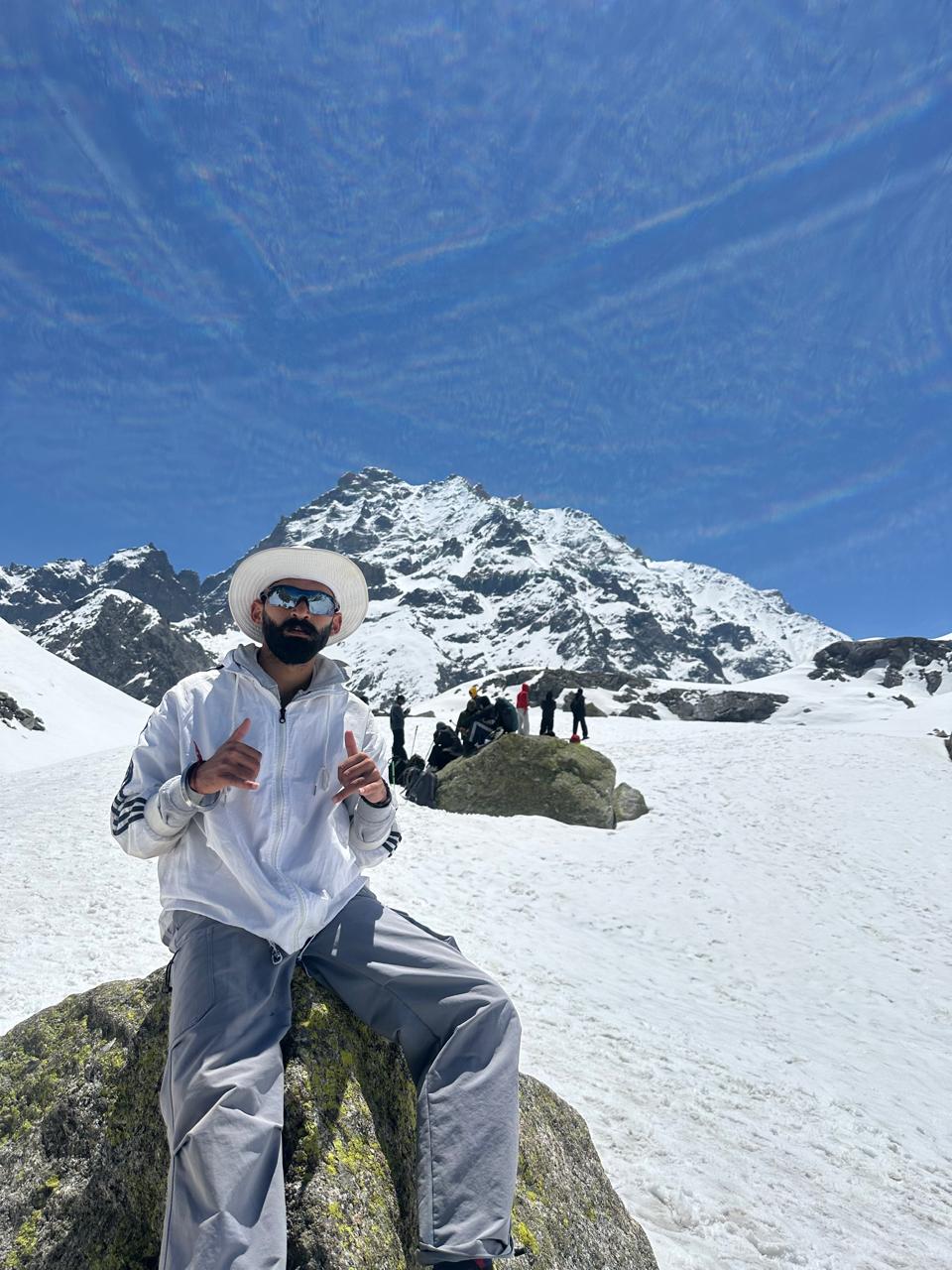
Akhil Deruwan
NIM Uttarkashi certified · 9 yrs experience
Akhil grew up in the foothills of the Garhwal Himalayas and has spent nearly a decade navigating its most demanding trails. He has led over 150 batches across Uttarakhand and Himachal Pradesh, with a strong focus on technical high-altitude routes and safety management. His calm under pressure and deep knowledge of local terrain make him a trusted leader for both beginner and advanced trekkers.
- Wilderness First Responder
- High Altitude Medicine
- Technical Route Navigation
- Search & Rescue
FAQ
Why Trek With Us
Travel Safe
Certified Team
Easy Cancellation
Well Equipped Campsite
Experienced Guide
No Hidden Charges