Overview
Kedarkantha — India's Most Beloved Winter Summit
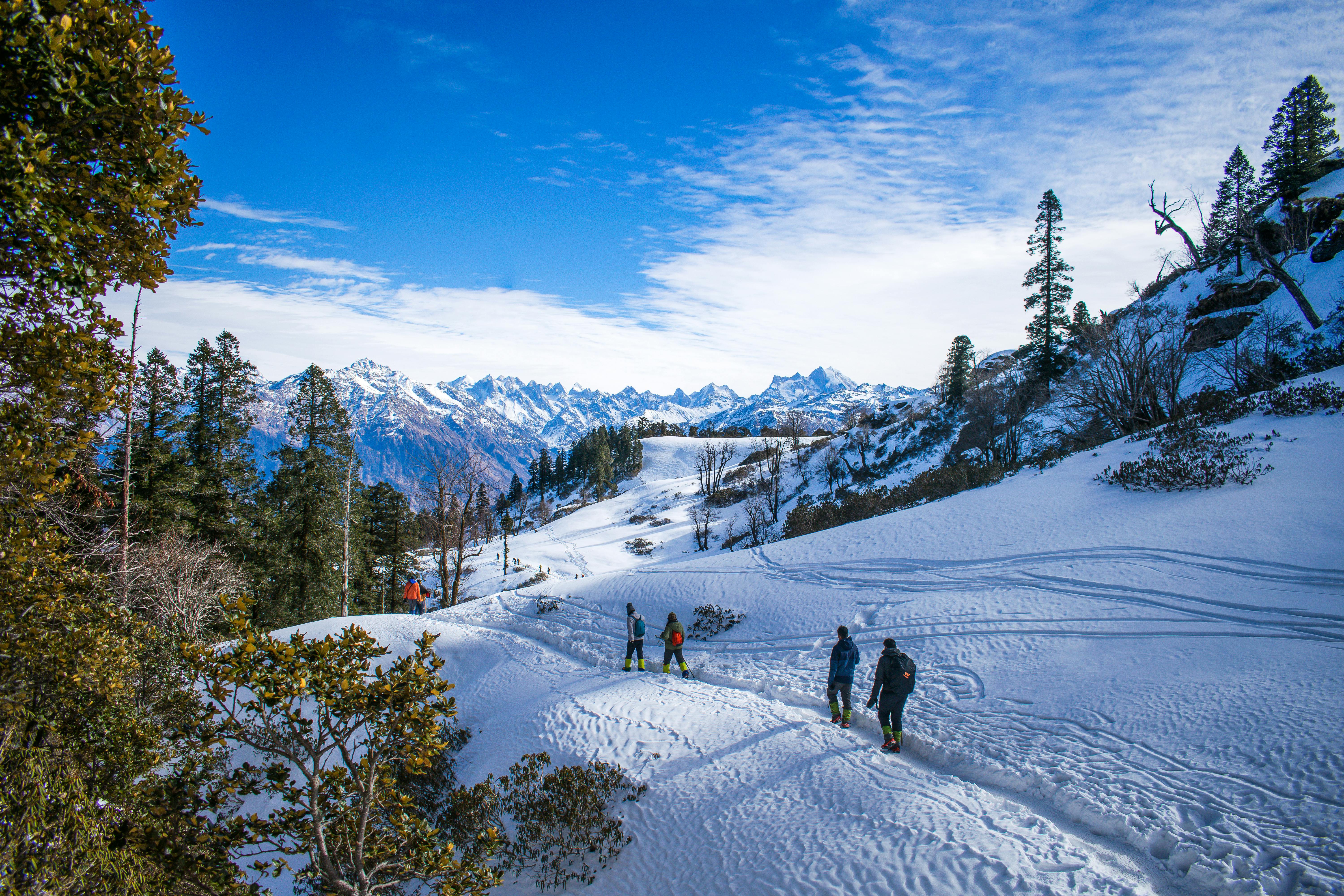
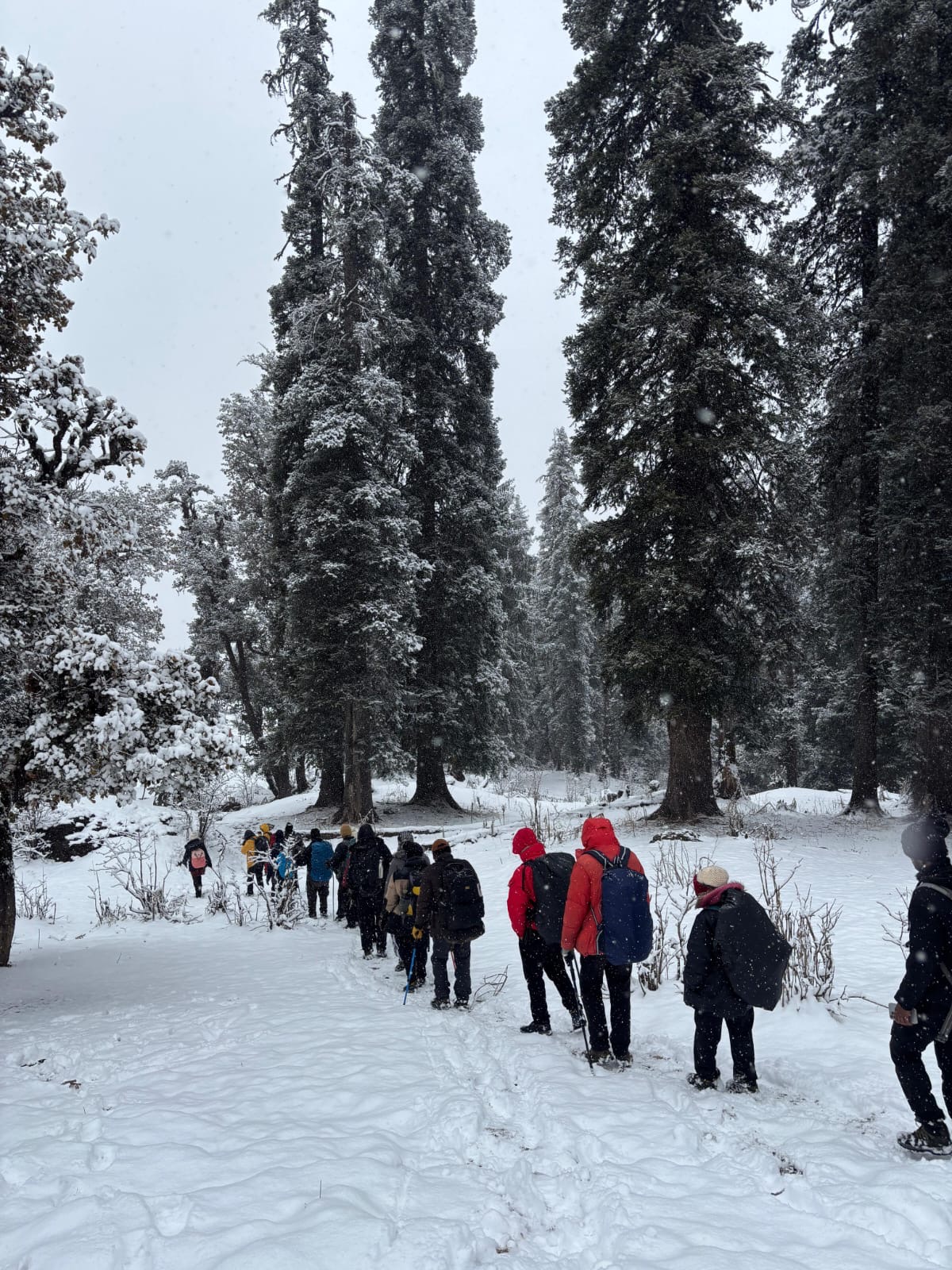
Kedarkantha at 12,500 ft (3,810 m) is the rite of passage for the Indian trekking community. Each winter between late December and early April, more than ten thousand trekkers walk the same six-day arc out of Sankri village in Uttarakhand's Tons valley — through oak-and-pine forests, past the frozen pond of Juda Ka Talab, across open snow meadows, and up the final pyramid to a summit that holds a small Lord Shiva shrine. It is, by some margin, the most popular winter trek in India, and there is good reason: the gradient is forgiving, the snow is reliable, and the panorama from the top spans most of the Garhwal Himalayas in one sweep.
Why this trek is unique
Kedarkantha sits inside the Govind Pashu Vihar Wildlife Sanctuary, a 957 sq km protected area that also holds the Har Ki Dun valley and the Bali Pass route. The sanctuary is one of the last remaining strongholds of the Himalayan monal, the koklass pheasant, and the elusive snow leopard at higher elevations. Unlike most beginner-friendly treks, Kedarkantha consistently delivers heavy snow — Sankri sits at 6,400 ft and the trail tops out at 12,500 ft, so even in a mild winter you walk through 2-4 feet of snow on the upper sections. The summit pyramid is a clean, isolated cone with no neighbouring obstruction, which means the 360° view is unbroken: Swargarohini I-IV (21,000+ ft), Bandarpoonch, Kala Nag, the Gangotri group, and the Yamunotri massif are all visible in a single rotation.
The route from Sankri
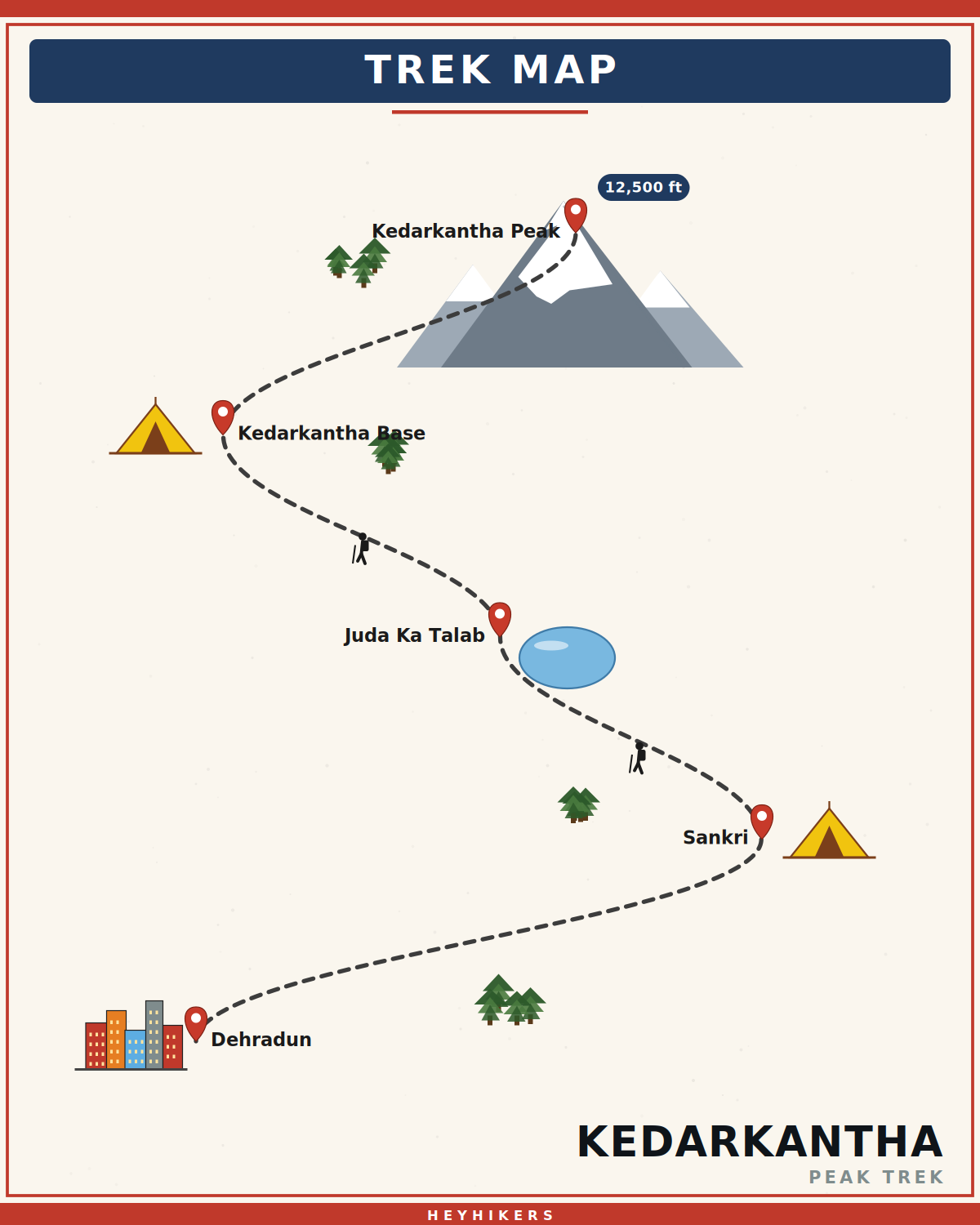
The classical four-day on-trail itinerary begins in Sankri (6,400 ft), a Garhwali village of slate-roofed houses and apple orchards reached by a 9-10 hour drive from Dehradun via Mussoorie, Purola, and Mori. Day 2 is a 4 km climb through oak and rhododendron forest to Juda Ka Talab (9,100 ft), a frozen pond named in local legend after a strand of Lord Shiva's hair. Day 3 is a short 3 km onward to Kedarkantha Base Camp at 11,250 ft, a tilted alpine bowl with the summit pyramid directly overhead. Day 4 is the summit push: a 3 AM start, headlamps in pitch dark, and a steady switchback climb to the summit by sunrise. The descent loops through Hargaon meadow and back to Sankri on Day 5, returning by a different forest trail through the apple orchards. The total elevation gain is just under 6,100 ft over four days — well within reach of any trekker who has done a few day-hikes at home.
What you'll see at the summit
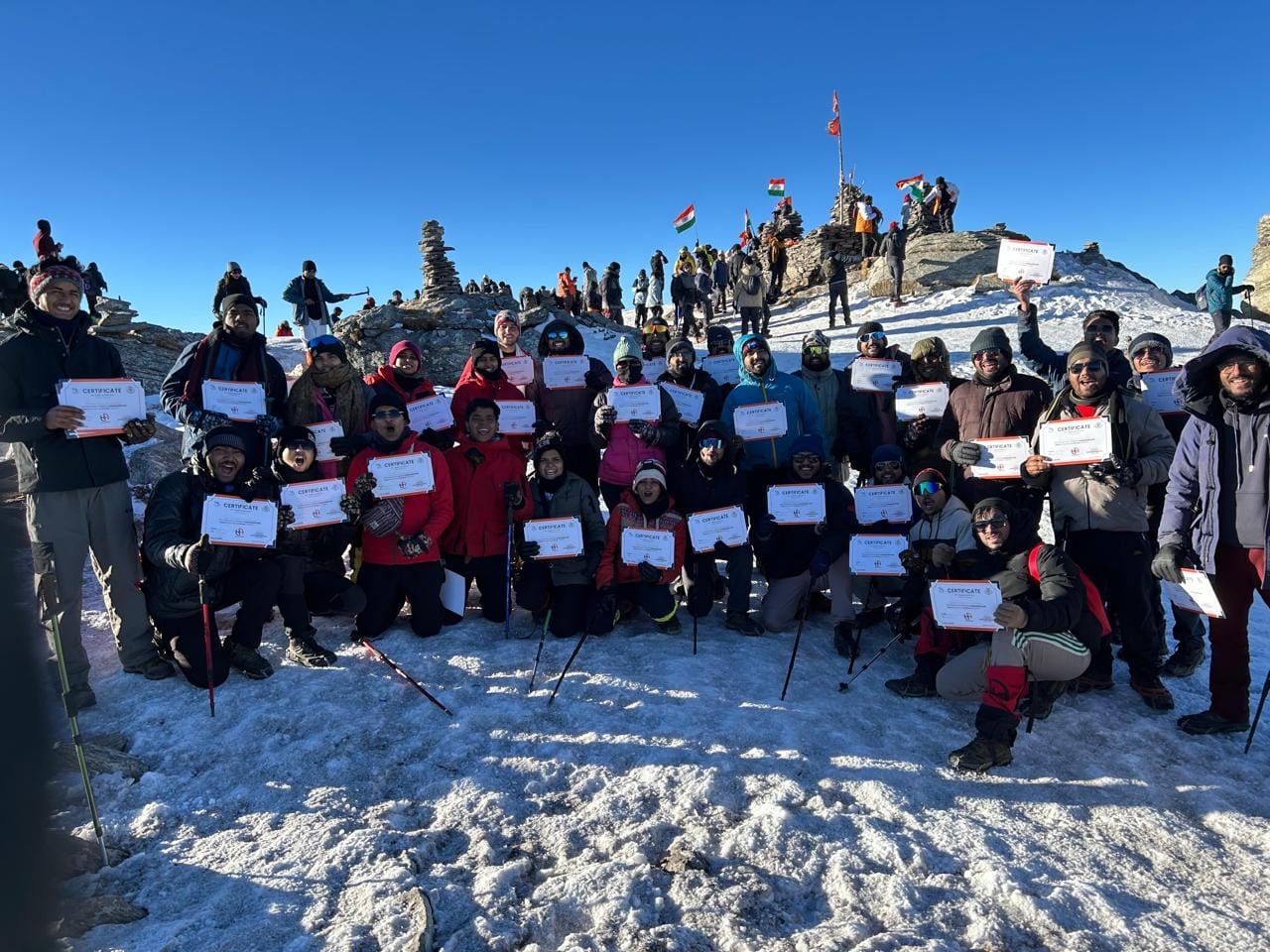
Sunrise from the Kedarkantha summit is the centrepiece of the trek and arguably the best 30-minute window in Indian trekking. The granite walls of Swargarohini directly to the north (the Mahabharata's "stairway to heaven") catch the first light, then Bandarpoonch and Kala Nag (Black Peak) follow as the line moves east. The summit holds a small temple platform with a trishul, bell, and prayer flags — locals consider Kedarkantha to be where Lord Shiva initially intended to meditate before moving to Kedarnath, and the name (kantha = throat in Sanskrit) refers to the spot where a serpent bell warned him away. On exceptionally clear winter mornings, Nanda Devi (25,646 ft) is visible 200 km to the east as a pyramid on the far horizon.
Best time to trek
The standard window is mid-December through mid-April for the snow trek. Early December and late April see patchy snow at the upper camps but a snow-free lower trail. Late October and early November are the post-monsoon season — clear skies, golden meadows, and no snow at all, which makes the trek easier but loses the winter aesthetic. May through early October is the green season but largely deserted; we do not run batches in monsoon (July-August) due to forest leech activity and unstable weather. The single best month is January — peak snow, stable weather, and the longest cold-weather window.
Camping and infrastructure
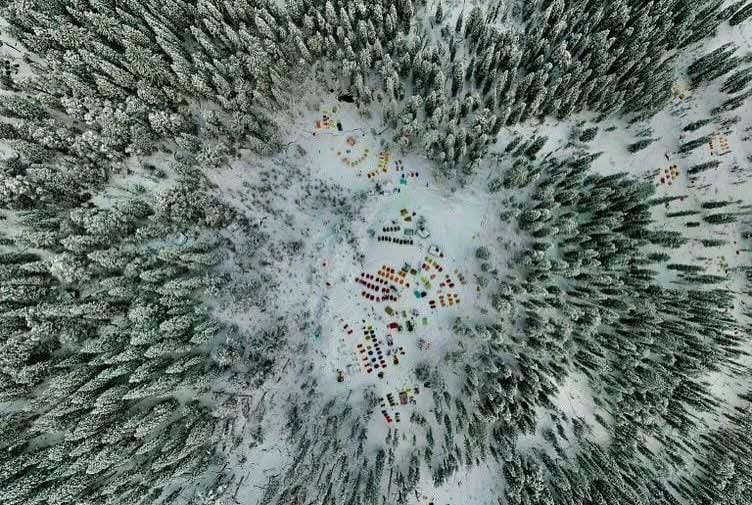
Sankri has roughly 30 small guesthouses; HeyHikers uses two of the older family-run ones with hot bucket water, twin-sharing rooms, and a proper kitchen mess. On trail we operate three campsites (Juda Ka Talab, Base Camp, Hargaon) with insulated four-season tents, sleeping bags rated to -15°C, foam mattresses, and a kitchen tent that produces fresh hot meals three times a day. Toilets are pit-style with a portable enclosure. Gear rentals (down jackets, gaiters, microspikes, trekking poles) are available from Sankri shops and from our own kit pool.
Prerequisites and who it's for
Kedarkantha is a graded easy trek — there is no technical climbing, no glacier travel, and no exposure beyond what is found on a steep snow slope. We accept first-time trekkers who can comfortably climb 1,000 ft of elevation on stairs without breathlessness, and we run a fitness check at booking time. Children above 10 with prior hiking experience regularly complete it; senior trekkers (60+) with cardiac clearance also do well. Anyone with untreated hypertension, recent surgery, or a history of pulmonary issues should consult our medical team before booking. Microspikes, gaiters, and a four-season sleeping bag are mandatory in winter; we supply all three.
Cultural notes
Sankri and the surrounding Tons valley villages — Saur, Gangad, Osla — are among the oldest continuously inhabited Garhwali settlements, with deep ties to the Mahabharata cycle. Duryodhana is worshipped here as a benevolent deity, an unusual local inversion of the standard north Indian narrative; the Karna and Someshwar temples in nearby Osla and Gangad are 2,000+ years old in continuous use. Apple cultivation is the second economy after tourism, and the apple orchards above Sankri are gifts of post-Independence horticulture missions. Buying a kilo of local apples or a wool sock from a Sankri shop is the simplest way to support the village economy.
Photos
Itinerary
Map
What trekkers say
"I'd never camped in snow before. The HeyHikers team made me feel safe every single step. The summit sunrise — standing at 12,500 ft watching peaks turn gold — I cried. Not from the cold. From the beauty."
PS
Priya Sharma
Kedarkantha, Dec 2025
"Seven lakes, each more unreal than the last. The logistics were flawless — the food at 13,000 ft was better than most restaurants I know. Our guide Farooq knew every stone on the trail. Doing Goechala with them next."
AM
Arjun Mehta
Kashmir Great Lakes, Aug 2025
Inclusion
- All meals (veg)
- Camping gear & tents
- Certified trek leader & guide
- Forest permits
- First aid & oxygen cylinder
- Sankri guesthouse stay
Exclusion
- Travel to/from Dehradun
- Personal clothing & gear
- Travel insurance
- Tips & personal expenses
- Anything not in inclusions
Things to Carry
- Trekking shoes (high-ankle, broken-in)
- 40-50L backpack with rain cover
- Two pairs of trek pants
- Three full-sleeve t-shirts (synthetic, not cotton)
- Fleece jacket and a heavier down/insulated jacket
- Thermal innerwear (top + bottom)
- Waterproof outer shell (jacket + pants)
- Woollen cap, sun cap, balaclava
- Two pairs of warm gloves (inner liner + outer)
- UV-rated sunglasses
- Headlamp with spare batteries
- Reusable water bottles (2L total) or hydration bladder
- Personal medical kit and prescription medicines
- Sunscreen (SPF 50+) and lip balm
- Toiletries and quick-dry towel
- Original photo ID (mandatory at forest checkposts)
How to Reach
Reach Dehradun by air (Jolly Grant Airport, IATA: DED), train (Dehradun Railway Station), or overnight bus from Delhi/Chandigarh.
From Dehradun, our shared transport leaves at 6:30 AM sharp from Prince Chowk and reaches Sankri in 9-10 hours via Mussoorie, Nowgaon, Purola, and Mori. The drive itself is one of the most scenic in Uttarakhand — the Tons river flanks the road for the last three hours.
If you're driving privately, follow Google Maps to "Sankri Govind National Park". The road is paved up to Mori and rough but passable for the last 1.5 hours.
Safety & Security
- Acclimatize properly — never skip rest days at altitude.
- Drink at least 4 litres of water per day above 9,000 ft.
- Tell your trek leader immediately if you feel headache, nausea, or breathlessness — early AMS signs are treatable, ignored ones are not.
- Stay close to the group; do not take shortcuts off the marked trail.
- Avoid alcohol and smoking for the entire duration of the trek.
- Keep a buffer day for travel — Himalayan roads can close without notice.
- Carry travel insurance that explicitly covers high-altitude trekking and helicopter evacuation.
Cancellation Policy
Cancellations must be requested in writing.
- More than 30 days before the trek start date: 90% refund. - 21–30 days before: 50% refund. - 11–20 days before: 25% refund. - 10 days or fewer: no refund, but you may transfer your slot to another trekker or to any future batch within 12 months at no extra charge.
Refunds are processed to the original payment method within 7-10 working days. Trip cancellations triggered by us (weather, force majeure, government restrictions) are refunded in full or moved to an alternate batch at your option.
Meet your trek leader
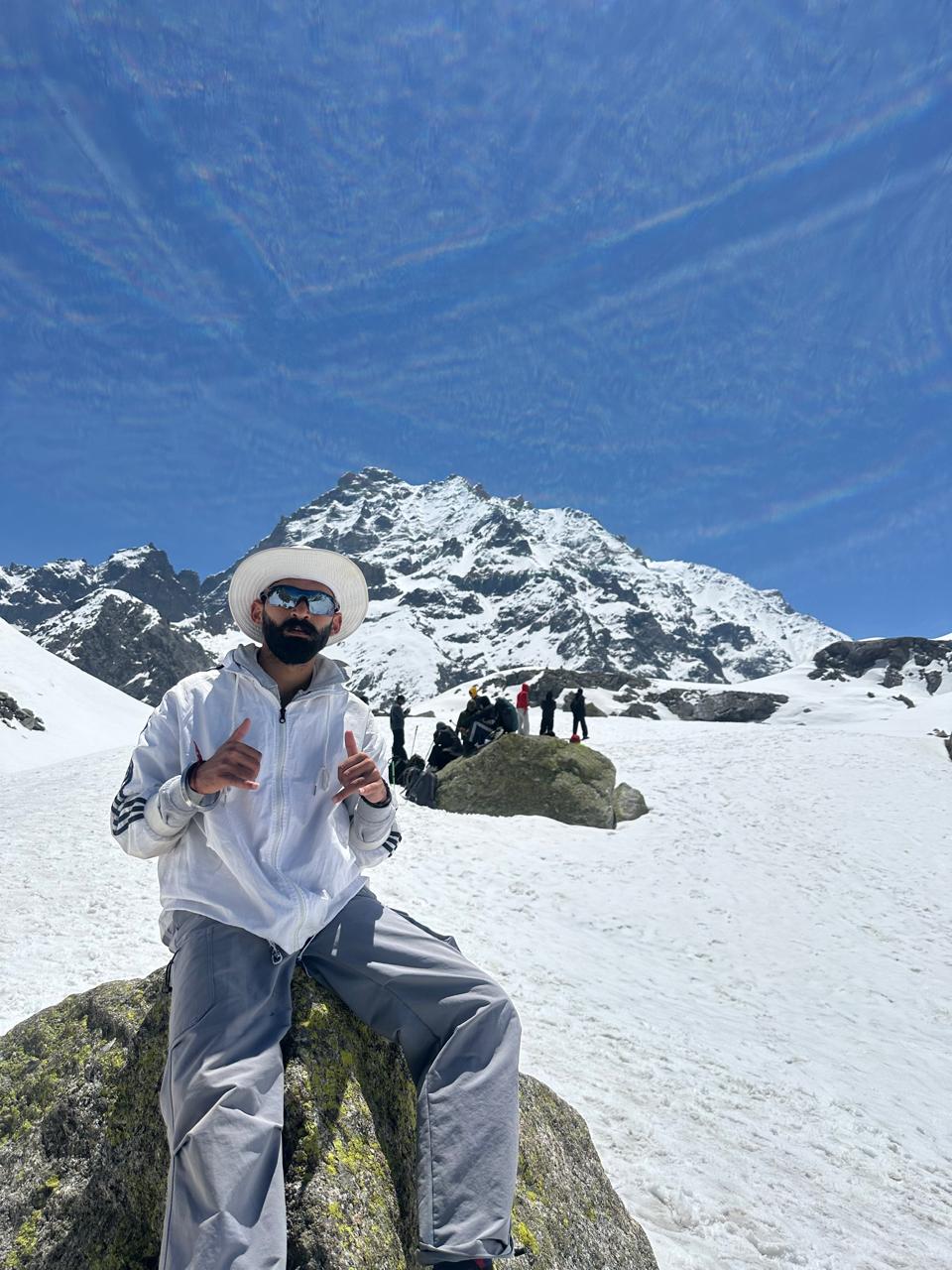
Akhil Deruwan
NIM Uttarkashi certified · 9 yrs experience
Akhil grew up in the foothills of the Garhwal Himalayas and has spent nearly a decade navigating its most demanding trails. He has led over 150 batches across Uttarakhand and Himachal Pradesh, with a strong focus on technical high-altitude routes and safety management. His calm under pressure and deep knowledge of local terrain make him a trusted leader for both beginner and advanced trekkers.
- Wilderness First Responder
- High Altitude Medicine
- Technical Route Navigation
- Search & Rescue
FAQ
Why Trek With Us
Travel Safe
Certified Team
Easy Cancellation
Well Equipped Campsite
Experienced Guide
No Hidden Charges