Overview
Brahmatal — Brahma's Lake and the Trishul Wall
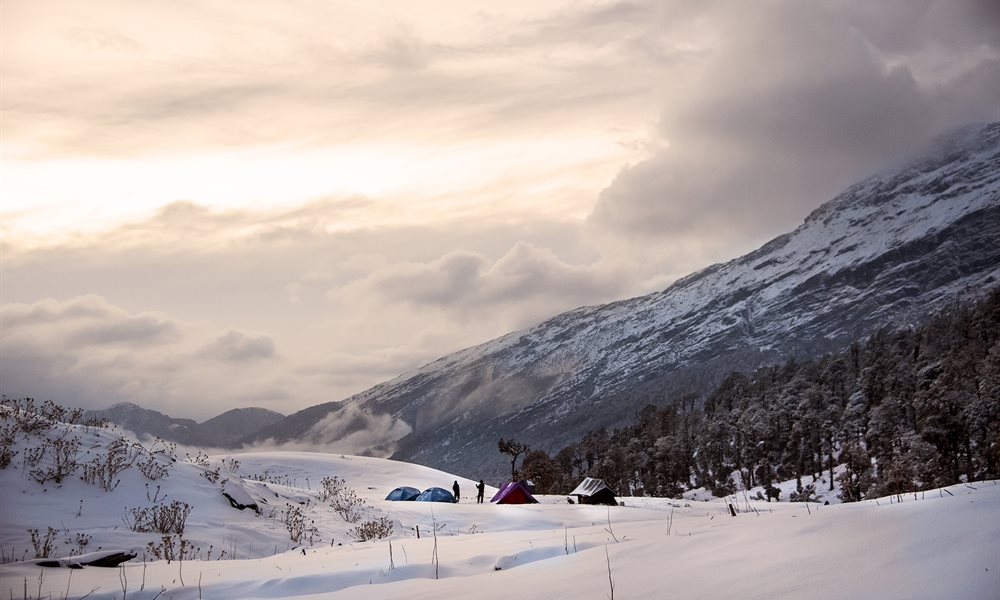
Brahmatal at 12,250 ft (3,734 m) is the most photogenic winter trek in Uttarakhand and one of the few high-altitude routes in India where deep snow, comfortable difficulty, and front-row views of two great Garhwali peaks come together in a single six-day itinerary. The trail climbs from the small ridge-top village of Lohajung in the Chamoli district, through old-growth oak and rhododendron forest, past the frozen alpine pond of Bekaltal, and finally onto a long open ridge where the wall of Trishul (23,360 ft) and Nanda Ghunti (20,700 ft) hangs across the Pindar valley like a stage set. The lake itself is a small glacial pool said in Garhwali tradition to be where Lord Brahma meditated before creating the universe — hence the name.
The geography that makes Brahmatal unique
Brahmatal sits on a long, narrow ridge that separates the upper Kail Ganga from the Pindar valley in Uttarakhand's Garhwal-Kumaon border country. The ridge is unusual for a high-altitude Indian trek in two ways. First, its orientation: the trail runs along the ridge's eastern flank facing directly across the Pindar valley to the Trishul-Nanda Ghunti wall, which means the great peaks are visible for the entire upper half of the trek rather than from a single summit. Second, its winter snow profile: the ridge gets two to four feet of compact snow from late December through mid-February but the gradient is so gentle and the trail so well-graded that most of it is walkable in microspikes without technical equipment. This combination — heavy snow on a low-effort gradient with continuous big-peak views — is what separates Brahmatal from other Uttarakhand winter treks.
The route from Lohajung
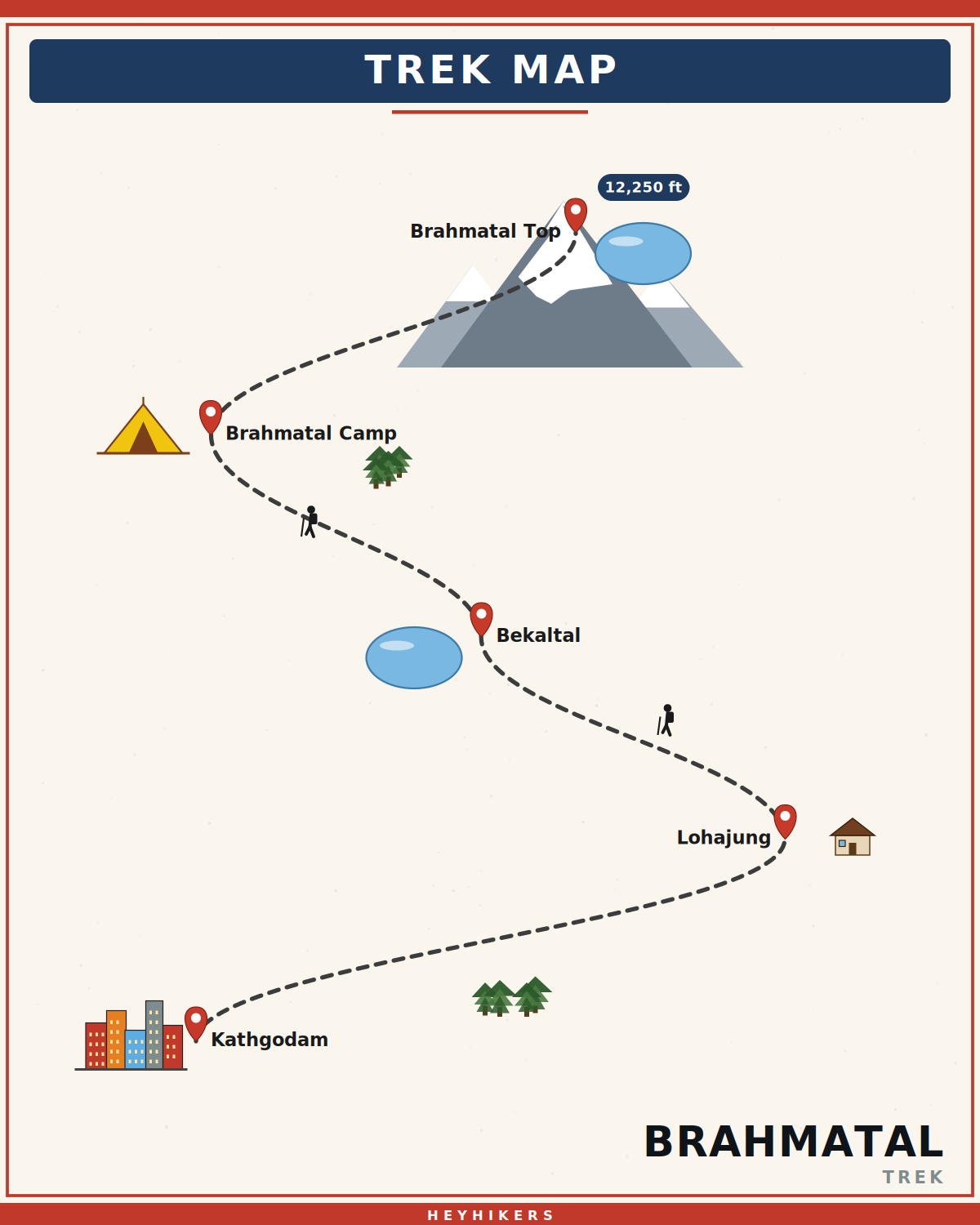
The trek begins at Lohajung (7,600 ft), a small ridge-top hamlet that serves as the common roadhead for Brahmatal, Roopkund, Bedni Bugyal, and Pindari treks. Day 2 climbs through banj oak and rhododendron to Bekaltal (9,700 ft), a small alpine pond that freezes solid by late December. Day 3 breaks above the treeline within the first kilometre and the entire Trishul-Nanda Ghunti wall opens overhead. The trail traces the Telandi ridge through alpine grassland and patchy juniper to the Brahmatal campsite at 10,500 ft. Day 4 is the summit day: a pre-dawn climb along the ridge to Jhandi Top at 11,800 ft, and then to Brahmatal Top at 12,250 ft, with a short descent to the lake itself on the northern flank. Days 5-6 retrace the descent to Lohajung and the long drive back to Kathgodam.
The summit panorama
The visual reward is one of the most complete Garhwal-Kumaon panoramas available from a sub-13,000 ft trek. Trishul (23,360 ft), the three-pronged peak named for Lord Shiva's trident, dominates the northern horizon; Nanda Ghunti (20,700 ft) sits to its left as a more tapered pyramid. The ridge also commands views of Maiktoli, Mrigthuni, and Devtoli (all 21,000+ ft) in the same arc, with Chaukhamba and Neelkanth stretching across the western horizon. On exceptionally clear winter mornings, the white pyramid of Nanda Devi (25,646 ft) peeks over the eastern shoulder. The 30-minute window around sunrise is the most photogenic — the granite walls catch first light at about 6:50 AM in winter and the entire panorama turns gold for fifteen minutes.
Best season and conditions
Brahmatal is primarily a winter trek — December through mid-March is the season, with late December to early February being the deepest-snow window. Earlier (early December) gives patchy snow only above 10,000 ft; later (March) gives hardening snow with melting day-time slush. Spring (April-May) brings rhododendron bloom in the lower forest but the upper ridge is by then a brown alpine grassland with less photographic interest. Monsoon (July-August) is closed due to leeches and clouded views. Autumn (October-November) is doable but most regulars wait for the first snow.
Camping and infrastructure
HeyHikers operates designated forest-department-permitted campsites at Bekaltal and Brahmatal with insulated four-season tents, sleeping bags rated to -15°C for winter batches, kitchen tents, and pit toilets. Mules carry group gear from Lohajung onwards (mules cannot ascend in deep snow above Bekaltal in peak winter, in which case the load is shared by porters). Lohajung has a clean guesthouse with hot bucket water and Jio mobile network; above Bekaltal there is no signal until you return.
Difficulty and prerequisites
Brahmatal is graded moderate on the standard difficulty scale, and one of the easiest treks of its altitude class. Daily walking is 6-12 km on graded forest and ridge trails. The maximum sleeping altitude is 10,500 ft (well below the AMS threshold), and the summit-day altitude is 12,250 ft. Suitable for fit first-time Himalayan trekkers, families with children 12+, and senior trekkers with cardiac clearance. Six weeks of cardiovascular base training (4 km jogs three times a week) is the recommended preparation. Microspikes are mandatory in winter; we provide them. There is no rope work or technical climbing.
Cultural and historical context
The legend of Brahma's meditation at the lake is part of a wider Garhwali tradition that ties the upper Pindar-Kail Ganga catchment to the Hindu trinity — Brahmatal for Brahma, Roopkund (a few ridges to the east) for Vishnu's avatar Nanda, and the Trishul peak itself for Shiva. The villagers of Wan and Lohajung still hold an annual fair at Brahmatal in the post-monsoon Bhadrapada month, when villagers carry brass deity-idols up the trail and make offerings of milk and ghee at the lake. The forest below Bekaltal is also a known habitat for the Himalayan musk deer (rare, mostly heard than seen) and the Himalayan monal pheasant — Uttarakhand's state bird, often visible at dawn around Bekaltal.
Itinerary
Map
What trekkers say
"I'd never camped in snow before. The HeyHikers team made me feel safe every single step. The summit sunrise — standing at 12,500 ft watching peaks turn gold — I cried. Not from the cold. From the beauty."
PS
Priya Sharma
Kedarkantha, Dec 2025
"Seven lakes, each more unreal than the last. The logistics were flawless — the food at 13,000 ft was better than most restaurants I know. Our guide Farooq knew every stone on the trail. Doing Goechala with them next."
AM
Arjun Mehta
Kashmir Great Lakes, Aug 2025
Inclusion
- All meals during the trek (vegetarian, freshly cooked)
- Camping gear — tents, sleeping bags, mats
- Certified trek leader and support guides
- Forest department permits and entry fees
- First-aid kit and supplemental oxygen
- Basecamp accommodation on twin/triple sharing
Exclusion
- Travel to and from the basecamp pickup point
- Personal trekking gear and clothing
- Travel insurance covering high-altitude trekking
- Tips, personal expenses, and meals during travel days
- Anything not explicitly listed under inclusions
Things to Carry
- Trekking shoes (high-ankle, broken-in)
- 40-50L backpack with rain cover
- Two pairs of trek pants
- Three full-sleeve t-shirts (synthetic, not cotton)
- Fleece jacket and a heavier down/insulated jacket
- Thermal innerwear (top + bottom)
- Waterproof outer shell (jacket + pants)
- Woollen cap, sun cap, balaclava
- Two pairs of warm gloves (inner liner + outer)
- UV-rated sunglasses
- Headlamp with spare batteries
- Reusable water bottles (2L total) or hydration bladder
- Personal medical kit and prescription medicines
- Sunscreen (SPF 50+) and lip balm
- Toiletries and quick-dry towel
- Original photo ID (mandatory at forest checkposts)
How to Reach
Reach Kathgodam by overnight train from Delhi (Ranikhet Express, Bagh Express, or Sampark Kranti). Our shared transport departs Kathgodam railway station at 7:00 AM on Day 1 and reaches Lohajung in 10 hours via Almora, Kausani, and Gwaldam.
Safety & Security
- Acclimatize properly — never skip rest days at altitude.
- Drink at least 4 litres of water per day above 9,000 ft.
- Tell your trek leader immediately if you feel headache, nausea, or breathlessness — early AMS signs are treatable, ignored ones are not.
- Stay close to the group; do not take shortcuts off the marked trail.
- Avoid alcohol and smoking for the entire duration of the trek.
- Keep a buffer day for travel — Himalayan roads can close without notice.
- Carry travel insurance that explicitly covers high-altitude trekking and helicopter evacuation.
Cancellation Policy
Cancellations must be requested in writing.
- More than 30 days before the trek start date: 90% refund. - 21–30 days before: 50% refund. - 11–20 days before: 25% refund. - 10 days or fewer: no refund, but you may transfer your slot to another trekker or to any future batch within 12 months at no extra charge.
Refunds are processed to the original payment method within 7-10 working days. Trip cancellations triggered by us (weather, force majeure, government restrictions) are refunded in full or moved to an alternate batch at your option.
Meet your trek leader
Akhil Deruwan
NIM Uttarkashi certified · 9 yrs experience
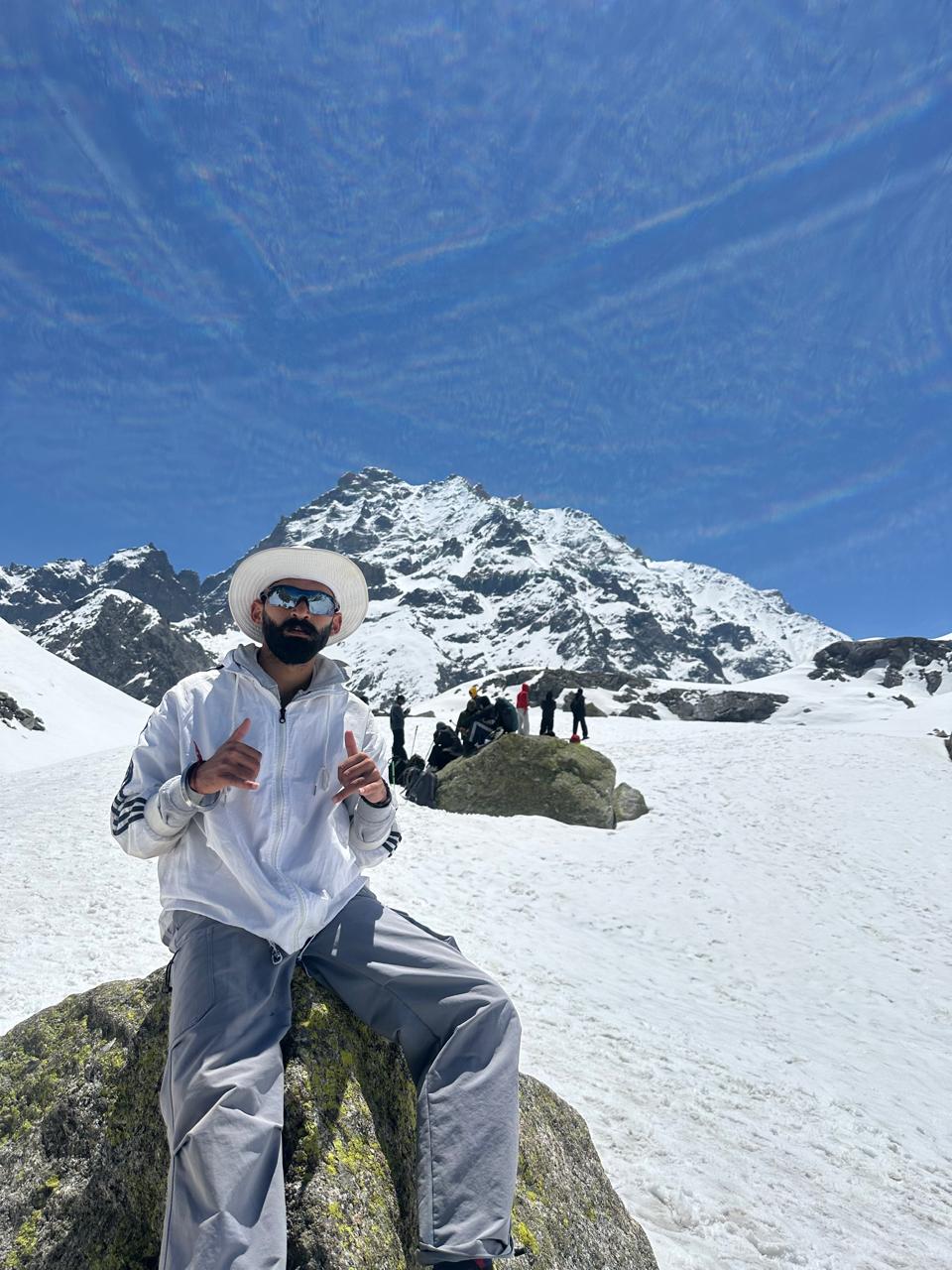
Akhil grew up in the foothills of the Garhwal Himalayas and has spent nearly a decade navigating its most demanding trails. He has led over 150 batches across Uttarakhand and Himachal Pradesh, with a strong focus on technical high-altitude routes and safety management. His calm under pressure and deep knowledge of local terrain make him a trusted leader for both beginner and advanced trekkers.
- Wilderness First Responder
- High Altitude Medicine
- Technical Route Navigation
- Search & Rescue
FAQ
Why Trek With Us
Travel Safe
Certified Team
Easy Cancellation
Well Equipped Campsite
Experienced Guide
No Hidden Charges