Overview
Chadar Trek — Walking the Frozen Zanskar
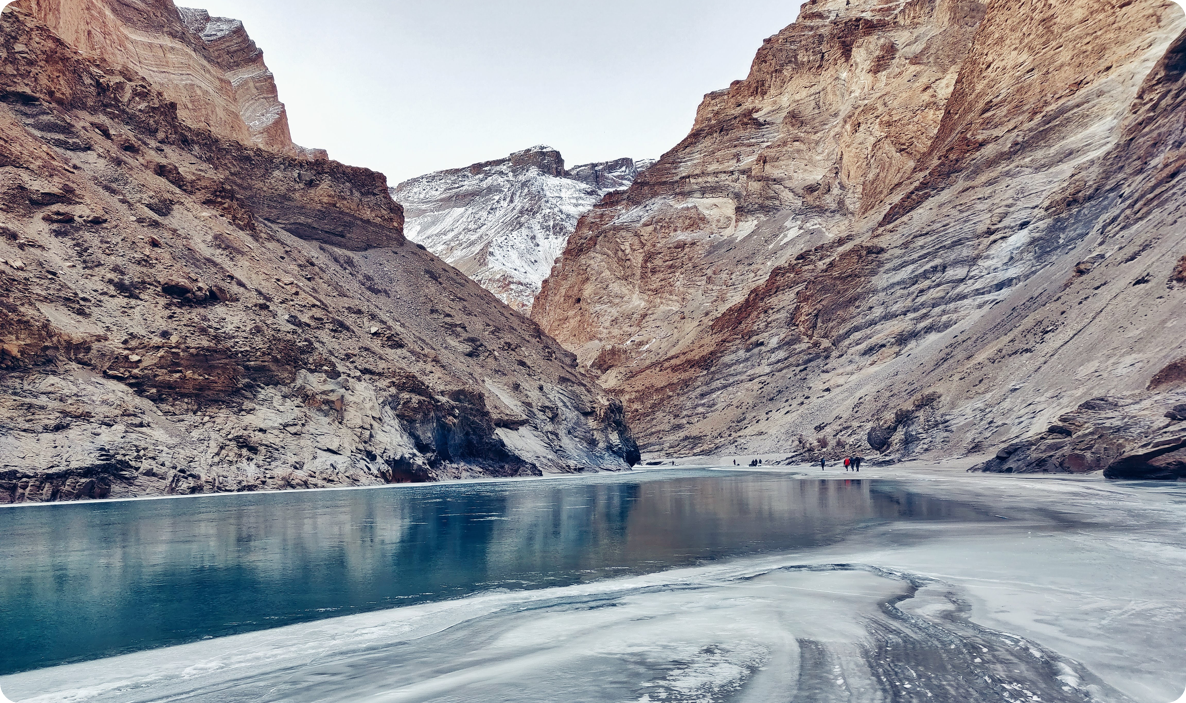
The Chadar Trek is the most iconic winter trek in India and one of the most extraordinary experiences on earth. "Chadar" means blanket in Hindi — a reference to the thick sheet of ice that forms over the Zanskar River each January and February, freezing the raging gorge into a flat white highway through the 300-metre deep canyon carved through the Zanskar range. Trekkers walk directly on the frozen river for five days through a gorge that has no other access in winter — the road into Zanskar from Leh is buried under metres of snow, and the Chadar is the only way in or out for the Zanskari villagers who have used this route for centuries.
The gorge
The Zanskar Gorge between Chilling and the Nerak waterfall is 35 km of continuous ice, flanked by vertical walls of shale, limestone, and granite rising 300 metres on both sides. The river ice is never uniform — some sections are flat, translucent, and smooth; others are fractured, heaved, or melted through in pools. Nerak waterfall, the turnaround point, is a 30-metre column of ice frozen solid against the cliff wall — the single most photographed image in Indian winter trekking. Camping is in natural caves cut into the cliff walls — the same caves used by Zanskari walkers for centuries, insulated by the rock and protected from the wind.
Temperature and conditions
The Chadar operates in the coldest conditions of any commercial trek in India. Daytime temperatures range from -10°C to -20°C with wind chill. Night temperatures at the cave camps regularly reach -25°C to -30°C. We provide -30°C-rated sleeping bags, insulated sleeping mats, and a full layering briefing. Hot meals, hot water for thermos flasks, and chemical hand warmers are provided throughout. Medical monitoring includes daily pulse oximetry and regular temperature checks.
The ice as a living surface
The Chadar ice is not static — it changes daily. The river current continues to flow below the ice, and pressure from upstream can crack and heave the surface. Our trek leaders walk the day's route each morning before the group moves, probing for thin sections and identifying detours around open water patches. The ice-reading skill of Zanskari guides — developed over generations — is what makes the Chadar trek safe. We use only certified Zanskari local guides who have walked the Chadar every year for a minimum of five years.
Itinerary
Map
What trekkers say
"I'd never camped in snow before. The HeyHikers team made me feel safe every single step. The summit sunrise — standing at 12,500 ft watching peaks turn gold — I cried. Not from the cold. From the beauty."
PS
Priya Sharma
Kedarkantha, Dec 2025
"Seven lakes, each more unreal than the last. The logistics were flawless — the food at 13,000 ft was better than most restaurants I know. Our guide Farooq knew every stone on the trail. Doing Goechala with them next."
AM
Arjun Mehta
Kashmir Great Lakes, Aug 2025
Inclusion
- All meals during the trek (vegetarian, freshly cooked)
- Camping gear — tents, sleeping bags, mats
- Certified trek leader and support guides
- Forest department permits and entry fees
- First-aid kit and supplemental oxygen
- Basecamp accommodation on twin/triple sharing
Exclusion
- Travel to and from the basecamp pickup point
- Personal trekking gear and clothing
- Travel insurance covering high-altitude trekking
- Tips, personal expenses, and meals during travel days
- Anything not explicitly listed under inclusions
Things to Carry
- Trekking shoes (high-ankle, broken-in)
- 40-50L backpack with rain cover
- Two pairs of trek pants
- Three full-sleeve t-shirts (synthetic, not cotton)
- Fleece jacket and a heavier down/insulated jacket
- Thermal innerwear (top + bottom)
- Waterproof outer shell (jacket + pants)
- Woollen cap, sun cap, balaclava
- Two pairs of warm gloves (inner liner + outer)
- UV-rated sunglasses
- Headlamp with spare batteries
- Reusable water bottles (2L total) or hydration bladder
- Personal medical kit and prescription medicines
- Sunscreen (SPF 50+) and lip balm
- Toiletries and quick-dry towel
- Original photo ID (mandatory at forest checkposts)
How to Reach
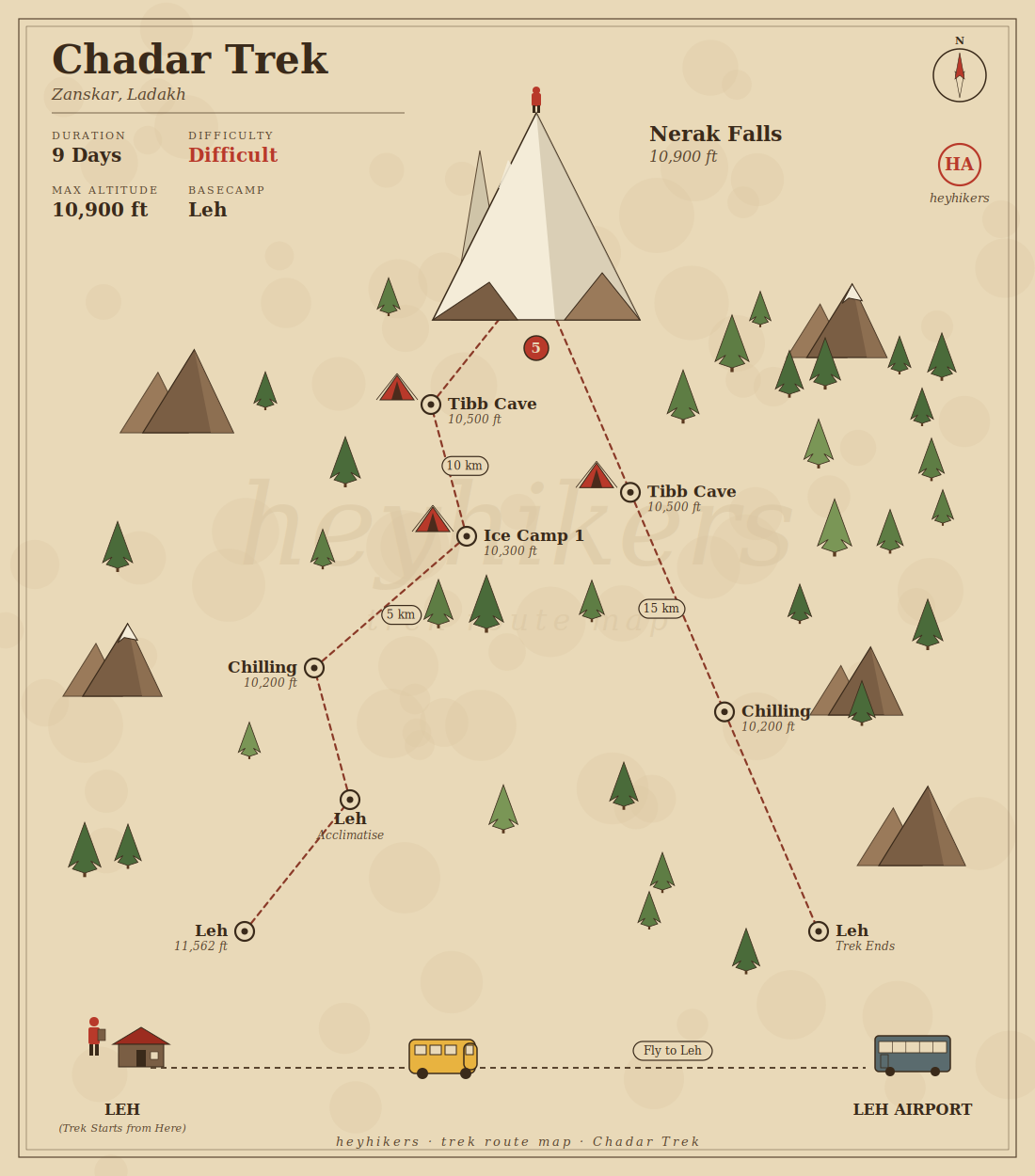
Fly to Leh (IXL) from Delhi (75 minutes). Flights operate twice daily in January-February by IndiGo, Air India, and SpiceJet. Arrive at least 2 full days before the trek — Leh is at 11,562 ft and acclimatisation is non-negotiable. We include 2 acclimatisation days in the itinerary before touching the ice.
On Day 3, our vehicle drives from Leh to Chilling (70 km, 2.5 hours) via the Nimmu-Chilling road. The frozen Zanskar begins at Chilling — the first steps onto the ice happen here. After the trek, drive back from Chilling to Leh on Day 8.
Safety & Security
- Acclimatize properly — never skip rest days at altitude.
- Drink at least 4 litres of water per day above 9,000 ft.
- Tell your trek leader immediately if you feel headache, nausea, or breathlessness — early AMS signs are treatable, ignored ones are not.
- Stay close to the group; do not take shortcuts off the marked trail.
- Avoid alcohol and smoking for the entire duration of the trek.
- Keep a buffer day for travel — Himalayan roads can close without notice.
- Carry travel insurance that explicitly covers high-altitude trekking and helicopter evacuation.
Cancellation Policy
Cancellations must be requested in writing.
- More than 30 days before the trek start date: 90% refund. - 21–30 days before: 50% refund. - 11–20 days before: 25% refund. - 10 days or fewer: no refund, but you may transfer your slot to another trekker or to any future batch within 12 months at no extra charge.
Refunds are processed to the original payment method within 7-10 working days. Trip cancellations triggered by us (weather, force majeure, government restrictions) are refunded in full or moved to an alternate batch at your option.
Meet your trek leader
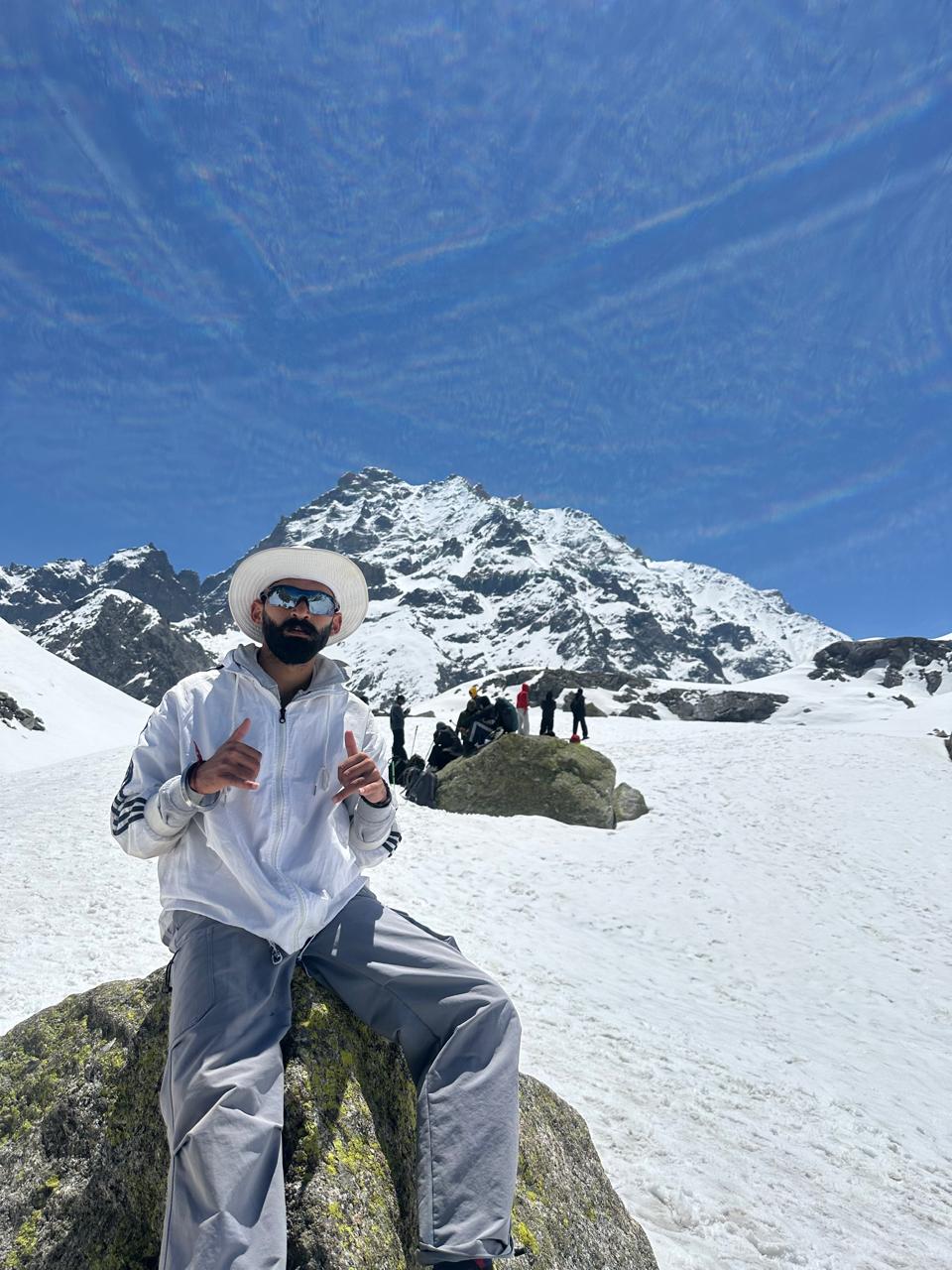
Akhil Deruwan
NIM Uttarkashi certified · 9 yrs experience
Akhil grew up in the foothills of the Garhwal Himalayas and has spent nearly a decade navigating its most demanding trails. He has led over 150 batches across Uttarakhand and Himachal Pradesh, with a strong focus on technical high-altitude routes and safety management. His calm under pressure and deep knowledge of local terrain make him a trusted leader for both beginner and advanced trekkers.
- Wilderness First Responder
- High Altitude Medicine
- Technical Route Navigation
- Search & Rescue
FAQ
Why Trek With Us
Travel Safe
Certified Team
Easy Cancellation
Well Equipped Campsite
Experienced Guide
No Hidden Charges