Overview
Chardham Yatra — The Sacred Four-Shrine Pilgrimage of Uttarakhand
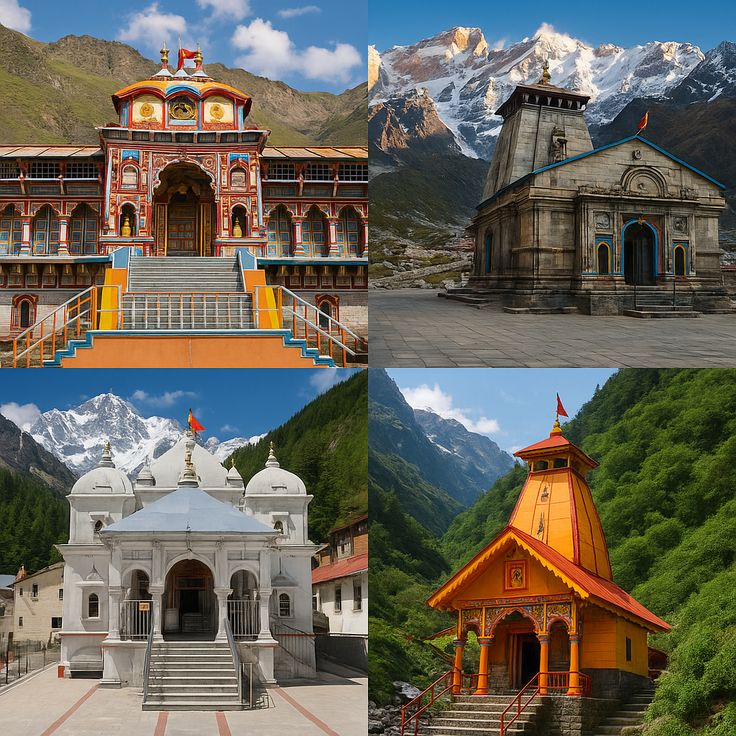
The Chardham Yatra is the most sacred Hindu pilgrimage circuit in India — four shrines (Yamunotri, Gangotri, Kedarnath, Badrinath) arrayed across the upper Garhwal Himalayas, each at the source of one of the country's holiest rivers. The yatra was popularised in its current form in the 8th century by Adi Shankaracharya, the reformer-philosopher who travelled the four corners of India establishing four mathas (monasteries) and re-anchoring the Hindu pilgrimage geography. Of the four dhams, three sit at over 10,000 ft (Yamunotri, Gangotri, Badrinath) and the fourth, Kedarnath, sits at 11,755 ft (3,583 m) — making the Chardham one of the highest mass pilgrimage circuits in the world.
The four dhams in geography
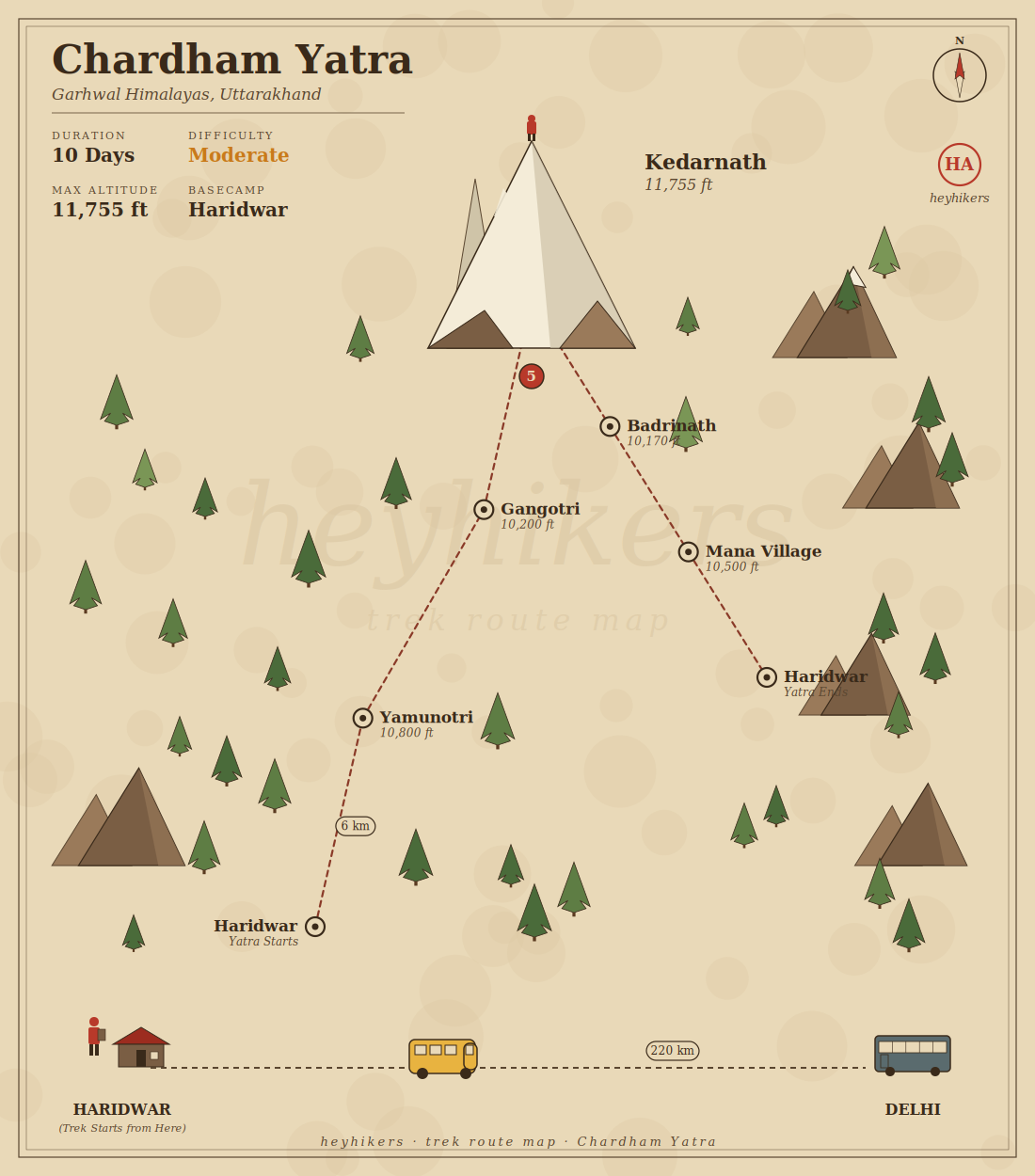
The Chardham forms a roughly C-shaped arc across the upper Garhwal: Yamunotri (10,800 ft) sits at the source of the Yamuna river in the western Garhwal, reached by a 6 km foot trek from Janki Chatti. Gangotri (10,200 ft) sits at the source of the Bhagirathi (the Ganga's main tributary) and is reached by road. Kedarnath (11,755 ft) sits at the head of the Mandakini valley below the Kedardome glacier, reached by an 18 km foot trek from Gaurikund or by helicopter from Phata. Badrinath (10,170 ft) sits at the head of the Alaknanda valley below the Neelkanth peak, reached by road. The full circuit, including connecting drives, runs to roughly 1,600 km — most of it on Garhwal mountain roads.
What the yatra actually involves
The Chardham is principally a road journey with two trekking sections. The Yamunotri leg is a 6 km up-and-back foot climb (or pony, palki, or porter-supported) from Janki Chatti — most pilgrims complete this in a single day. The Kedarnath leg is the demanding section: 18 km of paved stone steps with a 5,250 ft elevation gain from Gaurikund (6,500 ft) to the temple at 11,755 ft. Helicopter from Phata is an option (Rs 8,500 one-way, weather-dependent) for the elderly or unfit; full-foot is what most pilgrims do, in two days with a halt at Bhimbali or Linchauli. Gangotri and Badrinath are road-accessible — pilgrims walk the last 200-500 metres from the parking area into the temple precinct.
The opening and closing of the dhams
All four dhams open around Akshaya Tritiya (late April or early May) in a single ceremonial day called "Dwar Khulna" — the deities are brought from their respective winter seats (Mukhwa for Gangotri, Kharsali for Yamunotri, Ukhimath for Kedarnath, Joshimath for Badrinath) in elaborate processions and reinstalled in the temples. They close for the winter around Bhai Dooj (late October-early November) when winter snow seals the upper valleys. Outside this window only the winter seats remain accessible. The single best months for the yatra are May-June (clear weather, fewer crowds in early season, all four dhams accessible) and September-October (post-monsoon clarity, golden meadows, the autumn yatra crowd).
The 10-day itinerary
We run the yatra in 10 days with one buffer day for weather: Haridwar → Barkot (Day 1), Yamunotri trek and return to Barkot (Day 2), drive to Gangotri (Day 3), Gangotri darshan and drive to Guptkashi (Day 4), Kedarnath trek (Day 5), Kedarnath darshan and descent to Guptkashi (Day 6), drive to Badrinath (Day 7), Badrinath darshan and Mana village + drive back to Joshimath (Day 8), Joshimath to Devprayag (Day 9), Devprayag to Haridwar (Day 10). The route covers all four dhams in a single circuit and ends at the Har Ki Pauri Ganga aarti — the traditional yatra closing ritual.
Difficulty and who it's for
The Chardham is a graded moderate-difficulty pilgrimage. The Yamunotri leg is easy (6 km on a paved trail with assistance available). The Kedarnath leg is the hard section — 18 km of foot-trek with a 5,250 ft gain — and is the deciding factor for whether the yatra is feasible. Pilgrims with cardiac conditions, recent surgery, or untreated hypertension should consult a doctor before booking. We require a basic medical declaration at booking and run pulse oximetry at Kedarnath base camp. The yatra is otherwise accessible to a wide age range — we have run successful trips with pilgrims aged 12 to 75 (the latter via Kedarnath helicopter and pony assistance for Yamunotri).
Camping, accommodation, and food
The Chardham is a road-and-pilgrim-guesthouse trip — no camping. We use clean pilgrim hotels with hot water, twin-sharing rooms, and vegetarian dining halls at Barkot (Yamunotri base), Gangotri, Guptkashi (Kedarnath base), Badrinath, Joshimath, and Devprayag. At Kedarnath we stay in a guesthouse on the temple meadow itself (the only accommodation above the trek). Food throughout is sattvic vegetarian — most yatris observe a strict no-onion-no-garlic regime for the duration. Tea, biscuits, and packed lunches are provided on long drive days.
Cultural protocol and etiquette
The Chardham is a working pilgrim circuit, not a tourist trip. Modest dress is expected at all four shrines (full sleeves, knee-length or longer for both men and women, head covered with a stole or cap inside the sanctum). Leather belts, watch straps, and shoes are removed before entering any temple precinct. Photography inside the sanctum is prohibited at all four dhams. The "VIP darshan" arrangement we use bypasses the long entry queue (which can run 2-3 hours in season at Kedarnath) but does not exempt anyone from the dress code or the entry rituals. The mobile network is patchy throughout — Jio and BSNL work most reliably; expect 1-2 hour offline windows on most days.
Itinerary
Map
What trekkers say
"I'd never camped in snow before. The HeyHikers team made me feel safe every single step. The summit sunrise — standing at 12,500 ft watching peaks turn gold — I cried. Not from the cold. From the beauty."
PS
Priya Sharma
Kedarkantha, Dec 2025
"Seven lakes, each more unreal than the last. The logistics were flawless — the food at 13,000 ft was better than most restaurants I know. Our guide Farooq knew every stone on the trail. Doing Goechala with them next."
AM
Arjun Mehta
Kashmir Great Lakes, Aug 2025
Inclusion
- All meals during the yatra (vegetarian, sattvic)
- Air-conditioned Tempo Traveller for the full circuit
- Pilgrim guesthouse accommodation on twin-sharing
- Pony/palki/porter assistance for Kedarnath leg (optional)
- Yatra registration, biometric, and shrine VIP darshan support
- Experienced yatra guide and trip leader
- First-aid kit and supplemental oxygen at high-altitude legs
Exclusion
- Helicopter transfer to Kedarnath (Phata–Kedarnath, ~Rs 8,500 one-way)
- Personal pooja kits and shrine donations
- Travel insurance covering high-altitude pilgrimage
- Tips, personal expenses, and meals outside the planned itinerary
- Anything not explicitly listed under inclusions
Things to Carry
- Trekking shoes (high-ankle, broken-in)
- 40-50L backpack with rain cover
- Two pairs of trek pants
- Three full-sleeve t-shirts (synthetic, not cotton)
- Fleece jacket and a heavier down/insulated jacket
- Thermal innerwear (top + bottom)
- Waterproof outer shell (jacket + pants)
- Woollen cap, sun cap, balaclava
- Two pairs of warm gloves (inner liner + outer)
- UV-rated sunglasses
- Headlamp with spare batteries
- Reusable water bottles (2L total) or hydration bladder
- Personal medical kit and prescription medicines
- Sunscreen (SPF 50+) and lip balm
- Toiletries and quick-dry towel
- Original photo ID (mandatory at forest checkposts)
How to Reach
Reach Haridwar by air (nearest airport Jolly Grant, Dehradun — 1 hour by cab), train (Haridwar Junction — daily Shatabdi from New Delhi, plus Mussoorie Express, Nanda Devi Express overnight), or overnight Volvo from Delhi (8-9 hours, multiple daily departures from ISBT Kashmere Gate and ISBT Anand Vihar).
Our team meets you at Haridwar Railway Station on Day 1 by 7 AM. The yatra finishes at Haridwar Railway Station on Day 10 by approximately 4 PM, in time for the evening Shatabdi back to Delhi or the Har Ki Pauri Ganga aarti at 6:30 PM.
Safety & Security
- Acclimatize properly — never skip rest days at altitude.
- Drink at least 4 litres of water per day above 9,000 ft.
- Tell your trek leader immediately if you feel headache, nausea, or breathlessness — early AMS signs are treatable, ignored ones are not.
- Stay close to the group; do not take shortcuts off the marked trail.
- Avoid alcohol and smoking for the entire duration of the trek.
- Keep a buffer day for travel — Himalayan roads can close without notice.
- Carry travel insurance that explicitly covers high-altitude trekking and helicopter evacuation.
Cancellation Policy
Cancellations must be requested in writing.
- More than 30 days before the trek start date: 90% refund. - 21–30 days before: 50% refund. - 11–20 days before: 25% refund. - 10 days or fewer: no refund, but you may transfer your slot to another trekker or to any future batch within 12 months at no extra charge.
Refunds are processed to the original payment method within 7-10 working days. Trip cancellations triggered by us (weather, force majeure, government restrictions) are refunded in full or moved to an alternate batch at your option.
Meet your trek leader
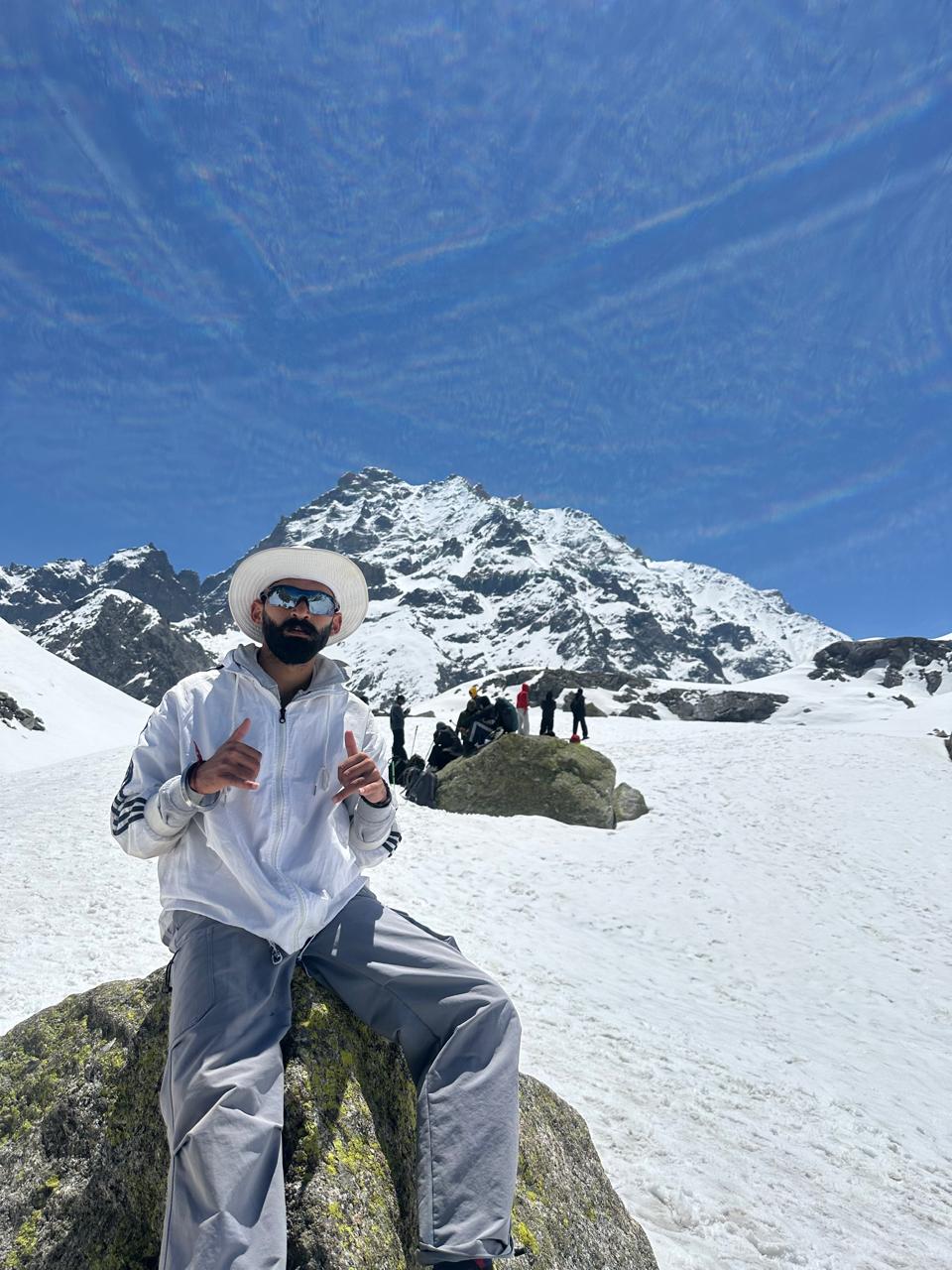
Akhil Deruwan
NIM Uttarkashi certified · 9 yrs experience
Akhil grew up in the foothills of the Garhwal Himalayas and has spent nearly a decade navigating its most demanding trails. He has led over 150 batches across Uttarakhand and Himachal Pradesh, with a strong focus on technical high-altitude routes and safety management. His calm under pressure and deep knowledge of local terrain make him a trusted leader for both beginner and advanced trekkers.
- Wilderness First Responder
- High Altitude Medicine
- Technical Route Navigation
- Search & Rescue
FAQ
Why Trek With Us
Travel Safe
Certified Team
Easy Cancellation
Well Equipped Campsite
Experienced Guide
No Hidden Charges