Overview
Churdhar — The Highest Peak of the Outer Himalayas
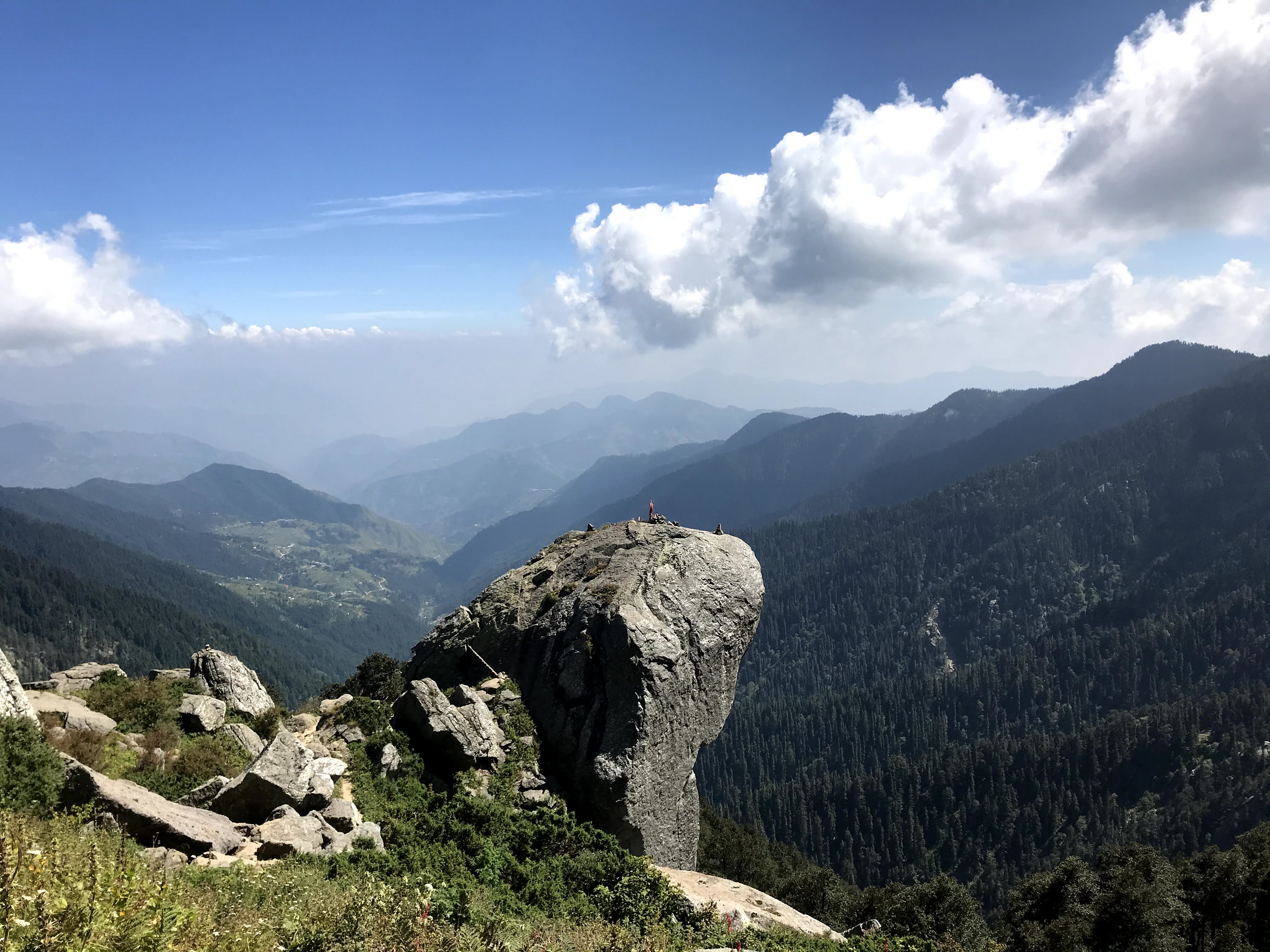
Churdhar (also called Chur Chandni, "snow bracelet") is the highest peak in the outer Himalayan range at 11,965 ft (3,647 m) — a granite summit in the Sirmaur district of Himachal Pradesh that dominates the southern horizon for everyone on the Shimla-Solan-Doon arc. The peak is famous for two things: a stone Shiva-Shirgul temple at the summit, and a 270-degree view that on the clearest October mornings stretches from Badrinath in Uttarakhand to Kinner Kailash in upper Kinnaur, with the entire Greater Himalayan front visible across two states. The trek is short (three days) but packs serious altitude gain.
The geography that makes Churdhar special
The outer Himalaya — the southernmost range that fronts onto the plains — generally tops out around 8,000 ft, with peaks like Hattu (8,100 ft near Narkanda) and Triund (9,430 ft) marking the upper limit. Churdhar at 11,965 ft is the singular outlier: a granite massif pushed up by tectonic forces along the Main Boundary Thrust, isolated from the Greater Himalaya by a hundred kilometres of intervening valleys, and standing above its neighbours by 3,000 ft. This isolation is what gives Churdhar its remarkable view — there is nothing of comparable height between you and the main range, so the entire Greater Himalayan front from Badrinath to Kinner Kailash spreads in unobstructed sequence on the northern horizon.
The summit and the temple
The Churdhar summit is crowned by a stone temple to Shirgul Maharaj, the local mountain deity who is identified with Shiva. Pilgrims have been climbing here for at least four centuries; the present temple is a small slate-roofed structure with a sanctum housing a stone idol of Shirgul. A small Hanuman temple stands beside it. In summer the temple is open and attended by a priest from the nearby village of Sarain; in winter (December-March) the summit is snowbound and the priest descends. The temple is the cultural and spiritual centrepiece of the entire Sirmaur region — every village from Nohradhar to Solan has a connection to Churdhar.
The route from Nohradhar
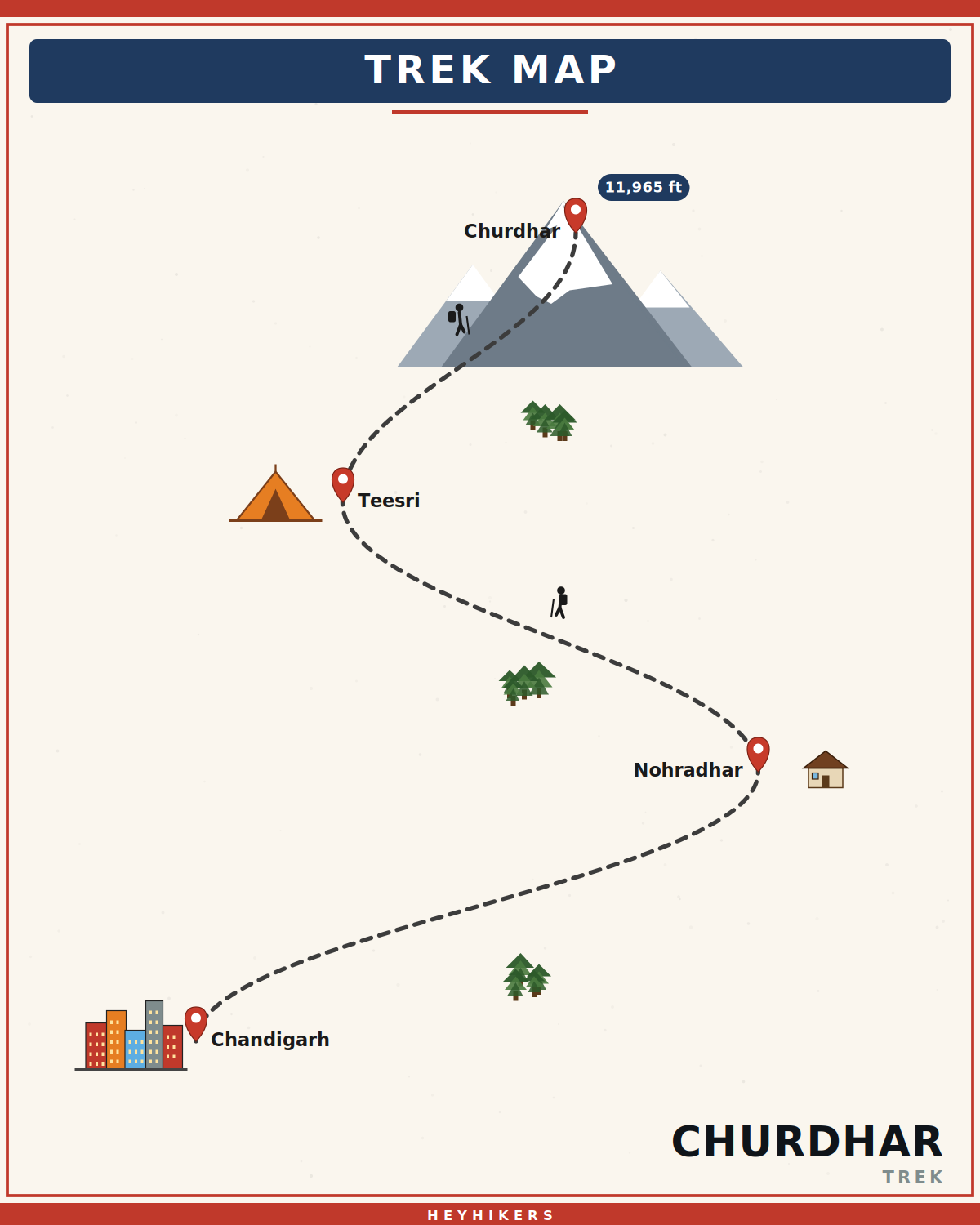
The trek begins at Nohradhar (4,500 ft), a small village in Sirmaur reached after a 7-hour drive from Chandigarh via Solan and Sirmaur town. Day 2 is the long summit day: a 4 AM start, a steep climb through deodar and silver oak forest to Teesri (8,500 ft, also called Jamnala) — a small clearing with a forest rest house — then a continued climb above the tree line through alpine meadows to the summit cone. The final 500 ft is on a granite slab; in summer this is straightforward walking, in autumn or after a fresh snowfall it requires microspikes. Reach the summit by 11 AM, perform a brief darshan at the Shirgul temple, photograph the Greater Himalaya, and begin the long descent back to Teesri for the night. Day 3 is the final descent to Nohradhar and the road back to Chandigarh.
What you can see from the summit
On a perfectly clear morning, the summit view includes (left to right): the Garhwal peaks of Uttarakhand with Bandarpunch (20,720 ft) and the Gangotri group; the Kinnaur peaks including Shrikhand Mahadev and Kinner Kailash; the Spiti rim including Manirang; and on the cleanest days the distant snows of the Pin Parvati range. To the south, the entire Doon valley and the cities of Chandigarh and Saharanpur are visible in the right haze conditions. The 270-degree panorama is best between October 15 and November 15, when the post-monsoon air is at its clearest.
Best season
Churdhar runs April to June and September to early December. The two prime windows are May (rhododendron in the lower forests, occasional snow on the summit cone) and October-November (post-monsoon clarity, the best Greater Himalaya views, frosty nights). July-August is monsoon and the trail becomes dangerously slippery. December-March sees deep snow on the upper slopes; the trek is technically possible with full winter gear and microspikes but most regulars avoid it.
Camping and infrastructure
The Day 1 night at Nohradhar is in a basic guesthouse. The Day 2 night at Teesri is split between the forest rest house (when available, on a first-come basis) and a tented camp. The summit itself has no infrastructure beyond the temple. The trek is supported by mules to Teesri and porters above; trekkers carry only daypacks. Mobile network is patchy at Nohradhar and absent above; expect to be offline from Day 2 morning to Day 3 afternoon.
Who this trek is for
Churdhar is a graded moderate trek — the 14 km summit-day with 4,000 ft of altitude gain is the demanding part. We require trekkers to be able to walk 12 km in a day with reasonable fitness; prior trekking experience helps but is not strictly required. The trek is suitable for fit beginners willing to commit to a long summit day. Common pitfalls: people underestimate the cold at the summit (it can drop to -5°C even in October), and the descent on tired knees on Day 2 is hard — trekking poles are essential. The view is the reward and is, by common consent, one of the best for the effort in Indian trekking.
Itinerary
Map
What trekkers say
"I'd never camped in snow before. The HeyHikers team made me feel safe every single step. The summit sunrise — standing at 12,500 ft watching peaks turn gold — I cried. Not from the cold. From the beauty."
PS
Priya Sharma
Kedarkantha, Dec 2025
"Seven lakes, each more unreal than the last. The logistics were flawless — the food at 13,000 ft was better than most restaurants I know. Our guide Farooq knew every stone on the trail. Doing Goechala with them next."
AM
Arjun Mehta
Kashmir Great Lakes, Aug 2025
Inclusion
- All meals during the trek (vegetarian, freshly cooked)
- Camping gear — tents, sleeping bags, mats
- Certified trek leader and support guides
- Forest department permits and entry fees
- First-aid kit and supplemental oxygen
- Basecamp accommodation on twin/triple sharing
Exclusion
- Travel to and from the basecamp pickup point
- Personal trekking gear and clothing
- Travel insurance covering high-altitude trekking
- Tips, personal expenses, and meals during travel days
- Anything not explicitly listed under inclusions
Things to Carry
- Trekking shoes (high-ankle, broken-in)
- 40-50L backpack with rain cover
- Two pairs of trek pants
- Three full-sleeve t-shirts (synthetic, not cotton)
- Fleece jacket and a heavier down/insulated jacket
- Thermal innerwear (top + bottom)
- Waterproof outer shell (jacket + pants)
- Woollen cap, sun cap, balaclava
- Two pairs of warm gloves (inner liner + outer)
- UV-rated sunglasses
- Headlamp with spare batteries
- Reusable water bottles (2L total) or hydration bladder
- Personal medical kit and prescription medicines
- Sunscreen (SPF 50+) and lip balm
- Toiletries and quick-dry towel
- Original photo ID (mandatory at forest checkposts)
How to Reach
Reach Chandigarh by air, train, or road. Our shared transport leaves at 6:00 AM on Day 1 and reaches Nohradhar village in 7 hours via Solan and Sirmaur.
Safety & Security
- Acclimatize properly — never skip rest days at altitude.
- Drink at least 4 litres of water per day above 9,000 ft.
- Tell your trek leader immediately if you feel headache, nausea, or breathlessness — early AMS signs are treatable, ignored ones are not.
- Stay close to the group; do not take shortcuts off the marked trail.
- Avoid alcohol and smoking for the entire duration of the trek.
- Keep a buffer day for travel — Himalayan roads can close without notice.
- Carry travel insurance that explicitly covers high-altitude trekking and helicopter evacuation.
Cancellation Policy
Cancellations must be requested in writing.
- More than 30 days before the trek start date: 90% refund. - 21–30 days before: 50% refund. - 11–20 days before: 25% refund. - 10 days or fewer: no refund, but you may transfer your slot to another trekker or to any future batch within 12 months at no extra charge.
Refunds are processed to the original payment method within 7-10 working days. Trip cancellations triggered by us (weather, force majeure, government restrictions) are refunded in full or moved to an alternate batch at your option.
Meet your trek leader
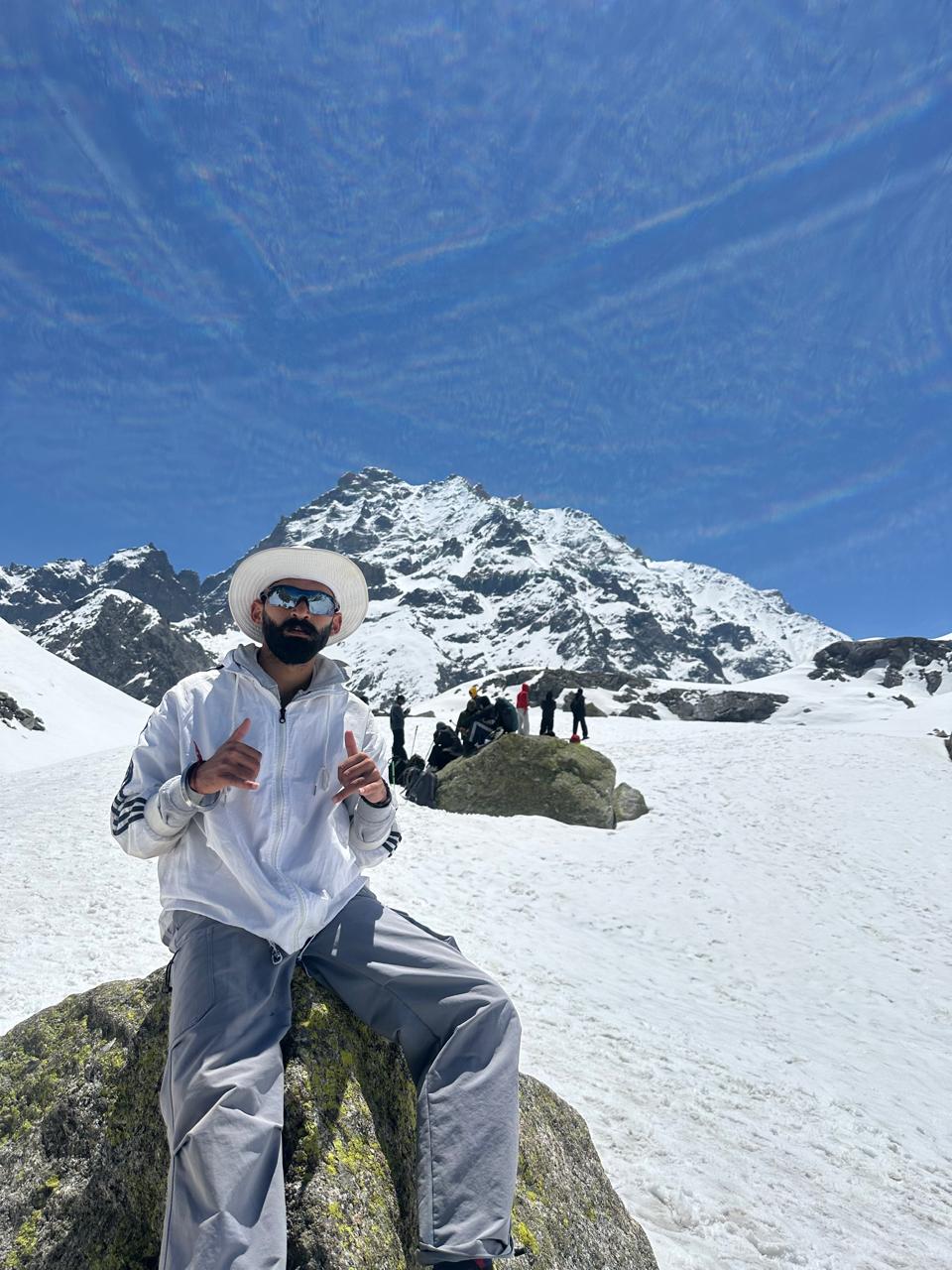
Akhil Deruwan
NIM Uttarkashi certified · 9 yrs experience
Akhil grew up in the foothills of the Garhwal Himalayas and has spent nearly a decade navigating its most demanding trails. He has led over 150 batches across Uttarakhand and Himachal Pradesh, with a strong focus on technical high-altitude routes and safety management. His calm under pressure and deep knowledge of local terrain make him a trusted leader for both beginner and advanced trekkers.
- Wilderness First Responder
- High Altitude Medicine
- Technical Route Navigation
- Search & Rescue
FAQ
Why Trek With Us
Travel Safe
Certified Team
Easy Cancellation
Well Equipped Campsite
Experienced Guide
No Hidden Charges