Overview
Kangra Valley — Tea Gardens, Gaddi Villages, and the Dhauladhar Wall
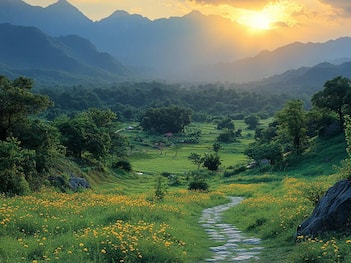
The Kangra Valley trek is the most under-rated low-altitude walk in Himachal Pradesh — a four-day village-to-village amble at 5,000 to 9,500 ft through some of the most beautiful cultivated landscape in the Indian Himalayas. The route winds through tea estates, deodar forests, and small Gaddi-shepherd hamlets, with the entire Dhauladhar wall rising as a near-vertical 12,000-ft backdrop on the northern horizon. There is no high pass, no glacier, no summit — and yet for trekkers who care about landscape, culture, and daily encounter with mountain villages, this is one of the richest itineraries in the country.
The geography of the Kangra valley
The Kangra valley is a wide, fertile basin running east-west between the Shivalik foothills and the Dhauladhar range, drained by the Beas river system. The valley floor sits at 1,200-3,000 ft and the Dhauladhar rises directly above it to 17,000 ft over a horizontal span of just fifteen kilometres — making the Dhauladhar one of the steepest mountain walls on Earth. Our trek operates on the upper rim of the valley, between Palampur (4,000 ft) and Bir-Billing (8,000 ft), gaining and losing altitude as it traces a series of sub-ridges and tributary nalas. The route follows ancient pastoral paths used by Gaddi shepherds for centuries — these trails are still in active use during the summer migration of flocks from the Kangra plains to the high meadows above 12,000 ft.
The route from Palampur
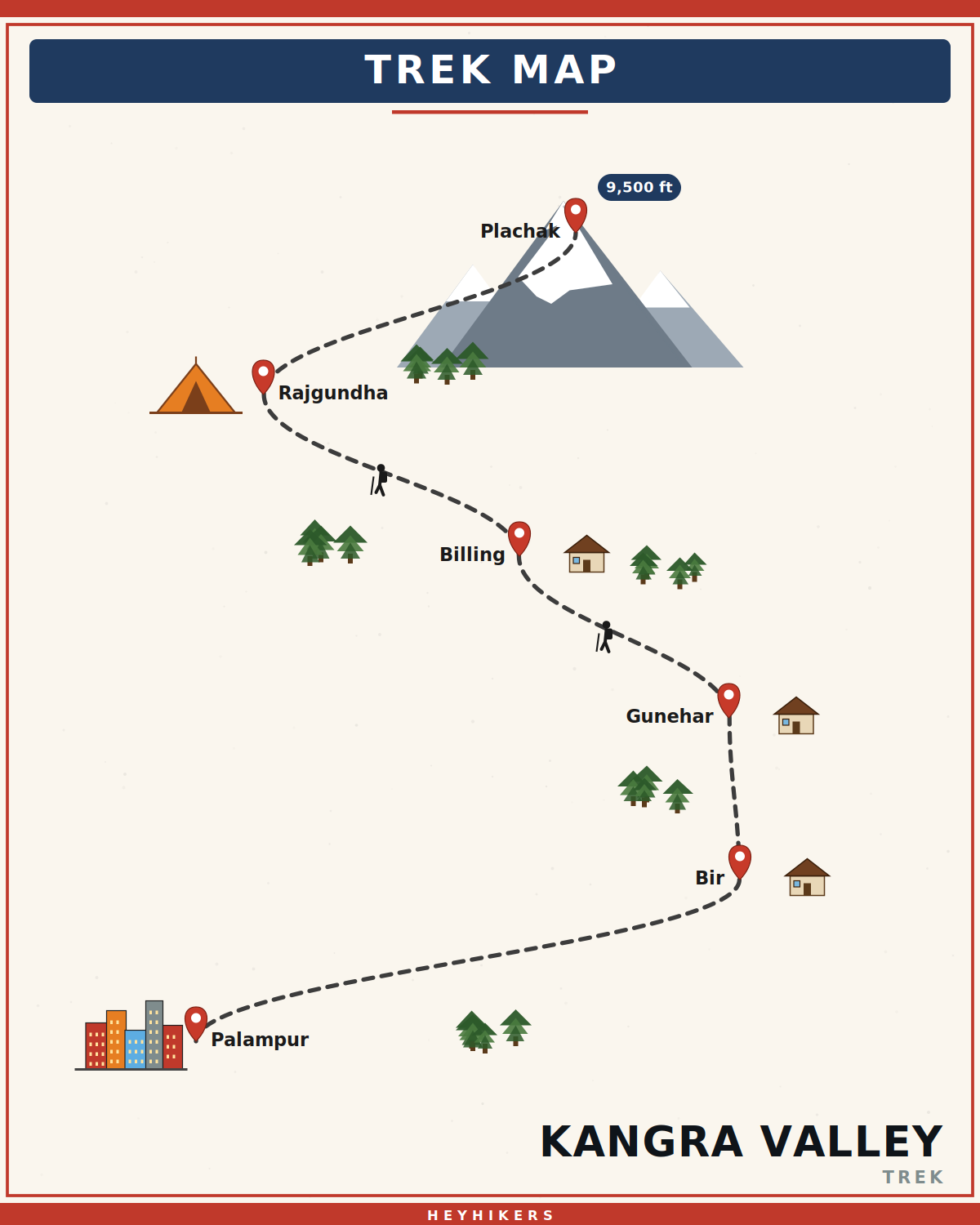
The trek begins at Palampur (4,000 ft), the tea-growing heart of Kangra, with a short drive to Bir village (5,000 ft) and a 6 km walk through tea estates and pine forest. Day 2 climbs through Tibetan-Buddhist Bir to Billing (8,000 ft) — the world-famous paragliding take-off site, where on a clear afternoon you can watch up to fifty paragliders in the air at the same time — and continues over a forested ridge to Rajgundha (7,500 ft), a small Gaddi-shepherd village of perhaps forty households. Day 3 is a circular walk on the upper meadows along the Bara Bhangal trail, reaching a viewpoint at 9,500 ft before descending back to Bir. Day 4 is the road return to Palampur.
Tea, paragliding, and Tibetan Buddhism
Three distinct cultural threads run through this trek. Kangra tea has been grown commercially since the British set up plantations in 1849; the leaf has a uniquely floral note attributed to the Dhauladhar mountain water and the slow growth at altitude. We visit a working tea estate and have a tasting on Day 1. Bir-Billing is one of the top three paragliding sites in the world — the World Paragliding Championship was held here in 2015 — and most of our trekkers add a tandem flight on Day 4. Tibetan Bir is home to a community of around 2,000 Tibetan refugees centred on the Chokling and Sherab Ling monasteries, and the village has Tibetan kitchens, monasteries, and a small Norbulingka-trained craft scene.
The Gaddi shepherds
The Gaddis are a semi-nomadic shepherd community whose traditional homeland is the Bharmour-Chamba region across the Dhauladhar from Kangra. Every summer they migrate their flocks (sheep, goats, and a few cows) over high passes — Indrahar, Minkiani, Kalihani — to the upper Kangra meadows, returning to their winter villages by October. The Gaddi men wear distinctive black wool chola robes with belted ropes; the women wear bright red dora skirts and silver jewellery. The Rajgundha homestay we use is a working Gaddi household and the dinner conversation typically covers wool prices, migration routes, and the ongoing challenges of a pastoral economy under climate change.
Best season
The Kangra Valley trek runs March to June and September to November. The two prime windows are April-May (rhododendron in the upper forests, mild days, paragliding peak) and October-November (post-monsoon clarity, golden meadows, the cleanest views of the Dhauladhar wall). July-August is monsoon — the lower trail is mostly walkable but the upper meadows are clouded; December-February brings snow on the Billing ridge but the lower sections (Bir, tea estates) are accessible.
Camping and infrastructure
Two of the three nights are in homestays (Bir and Rajgundha) — comfortable, family-run lodgings with hot showers, basic but clean rooms, and home-cooked Himachali food. The middle night at the high camp may be tented depending on conditions. The trek is supported by light vehicles where the trail meets a road and porters where it does not; trekkers carry only daypacks. Mobile network is reasonable in Bir and patchy in Rajgundha; expect to be offline for a few hours on the upper section.
Who this trek is for
This is the gentlest multi-day Himalayan trek HeyHikers operates. Daily walking is 6-10 km on well-graded trails; the highest point is 9,500 ft so altitude is not an issue. It is suitable for families with children eight and above, older trekkers, people coming off injury, and anyone who wants a soft introduction to the Himalayas with cultural depth. The combination of tea, paragliding, Tibetan Buddhism, and Gaddi pastoral culture in four days is genuinely rare.
Itinerary
Map
What trekkers say
"I'd never camped in snow before. The HeyHikers team made me feel safe every single step. The summit sunrise — standing at 12,500 ft watching peaks turn gold — I cried. Not from the cold. From the beauty."
PS
Priya Sharma
Kedarkantha, Dec 2025
"Seven lakes, each more unreal than the last. The logistics were flawless — the food at 13,000 ft was better than most restaurants I know. Our guide Farooq knew every stone on the trail. Doing Goechala with them next."
AM
Arjun Mehta
Kashmir Great Lakes, Aug 2025
Inclusion
- All meals during the trek (vegetarian, freshly cooked)
- Camping gear — tents, sleeping bags, mats
- Certified trek leader and support guides
- Forest department permits and entry fees
- First-aid kit and supplemental oxygen
- Basecamp accommodation on twin/triple sharing
Exclusion
- Travel to and from the basecamp pickup point
- Personal trekking gear and clothing
- Travel insurance covering high-altitude trekking
- Tips, personal expenses, and meals during travel days
- Anything not explicitly listed under inclusions
Things to Carry
- Trekking shoes (high-ankle, broken-in)
- 40-50L backpack with rain cover
- Two pairs of trek pants
- Three full-sleeve t-shirts (synthetic, not cotton)
- Fleece jacket and a heavier down/insulated jacket
- Thermal innerwear (top + bottom)
- Waterproof outer shell (jacket + pants)
- Woollen cap, sun cap, balaclava
- Two pairs of warm gloves (inner liner + outer)
- UV-rated sunglasses
- Headlamp with spare batteries
- Reusable water bottles (2L total) or hydration bladder
- Personal medical kit and prescription medicines
- Sunscreen (SPF 50+) and lip balm
- Toiletries and quick-dry towel
- Original photo ID (mandatory at forest checkposts)
How to Reach
Reach Pathankot by train, then drive 3 hours to Palampur. Or fly to Gaggal (Dharamshala) and drive 1 hour to Palampur. Trek starts in Palampur on Day 1 morning.
Safety & Security
- Acclimatize properly — never skip rest days at altitude.
- Drink at least 4 litres of water per day above 9,000 ft.
- Tell your trek leader immediately if you feel headache, nausea, or breathlessness — early AMS signs are treatable, ignored ones are not.
- Stay close to the group; do not take shortcuts off the marked trail.
- Avoid alcohol and smoking for the entire duration of the trek.
- Keep a buffer day for travel — Himalayan roads can close without notice.
- Carry travel insurance that explicitly covers high-altitude trekking and helicopter evacuation.
Cancellation Policy
Cancellations must be requested in writing.
- More than 30 days before the trek start date: 90% refund. - 21–30 days before: 50% refund. - 11–20 days before: 25% refund. - 10 days or fewer: no refund, but you may transfer your slot to another trekker or to any future batch within 12 months at no extra charge.
Refunds are processed to the original payment method within 7-10 working days. Trip cancellations triggered by us (weather, force majeure, government restrictions) are refunded in full or moved to an alternate batch at your option.
Meet your trek leader
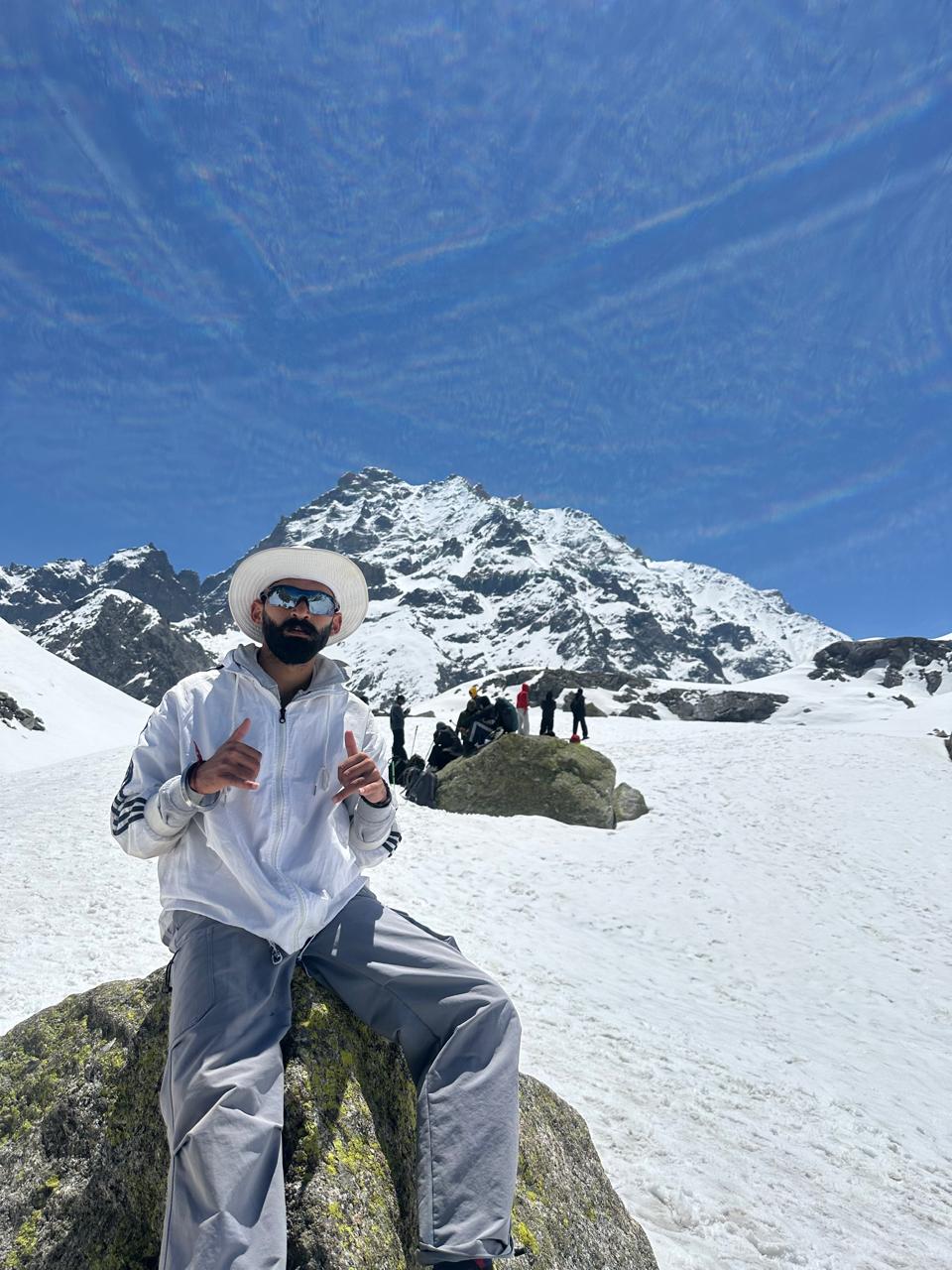
Akhil Deruwan
NIM Uttarkashi certified · 9 yrs experience
Akhil grew up in the foothills of the Garhwal Himalayas and has spent nearly a decade navigating its most demanding trails. He has led over 150 batches across Uttarakhand and Himachal Pradesh, with a strong focus on technical high-altitude routes and safety management. His calm under pressure and deep knowledge of local terrain make him a trusted leader for both beginner and advanced trekkers.
- Wilderness First Responder
- High Altitude Medicine
- Technical Route Navigation
- Search & Rescue
FAQ
Why Trek With Us
Travel Safe
Certified Team
Easy Cancellation
Well Equipped Campsite
Experienced Guide
No Hidden Charges