Overview
Kinner Kailash — A Pilgrimage to a 79-Foot Natural Shiva Lingam
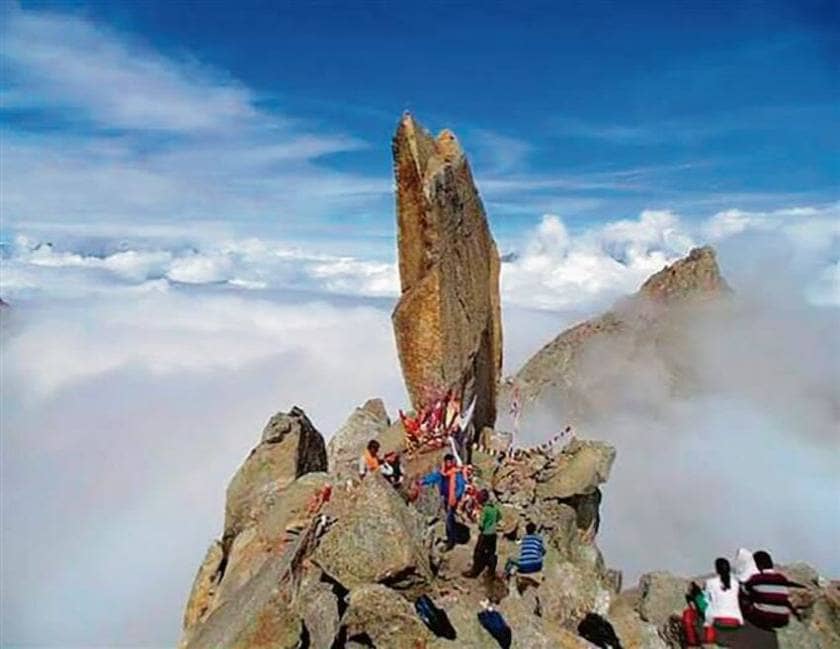
Kinner Kailash is the most demanding five-day trek in the Indian Himalayas — a near-vertical pilgrimage from Tangling village in Kinnaur to a natural rock lingam at 15,985 ft (4,872 m) on the Kinner Kailash massif, sacred to Hindus as one of the four manifestations of Mount Kailash on Earth. The trek packs more elevation gain per day than almost any other route at this length: 4,000 ft on Day 2 alone, with a summit day of 14 hours and 18 km. It is short in calendar but extreme in intensity, and the spiritual atmosphere — pilgrims have been making this journey for over a thousand years — is what trekkers remember more than the suffering.
The geography and sacred topography
The Kinner Kailash massif is a sub-range of the Greater Himalaya in the Kinnaur district of Himachal Pradesh, between the Sutlej and Spiti valleys. The main summit (Kinner Kailash, 21,000 ft / 6,400 m) is unclimbed and forbidden by religious tradition; the trekking objective is the natural Shiva lingam — a 79-foot vertical column of granite at 15,985 ft on a sub-ridge below the main peak. The lingam's exact origin is geological (a remnant of differential erosion in a granitic intrusion) but the cultural belief is that it is a self-manifested (svayambhu) form of Lord Shiva. Hindus consider Kinner Kailash one of five sacred Kailash mountains: the others are Mount Kailash in Tibet, Adi Kailash in Uttarakhand, Manimahesh Kailash in Chamba, and Shrikhand Mahadev in Kullu.
The route from Tangling
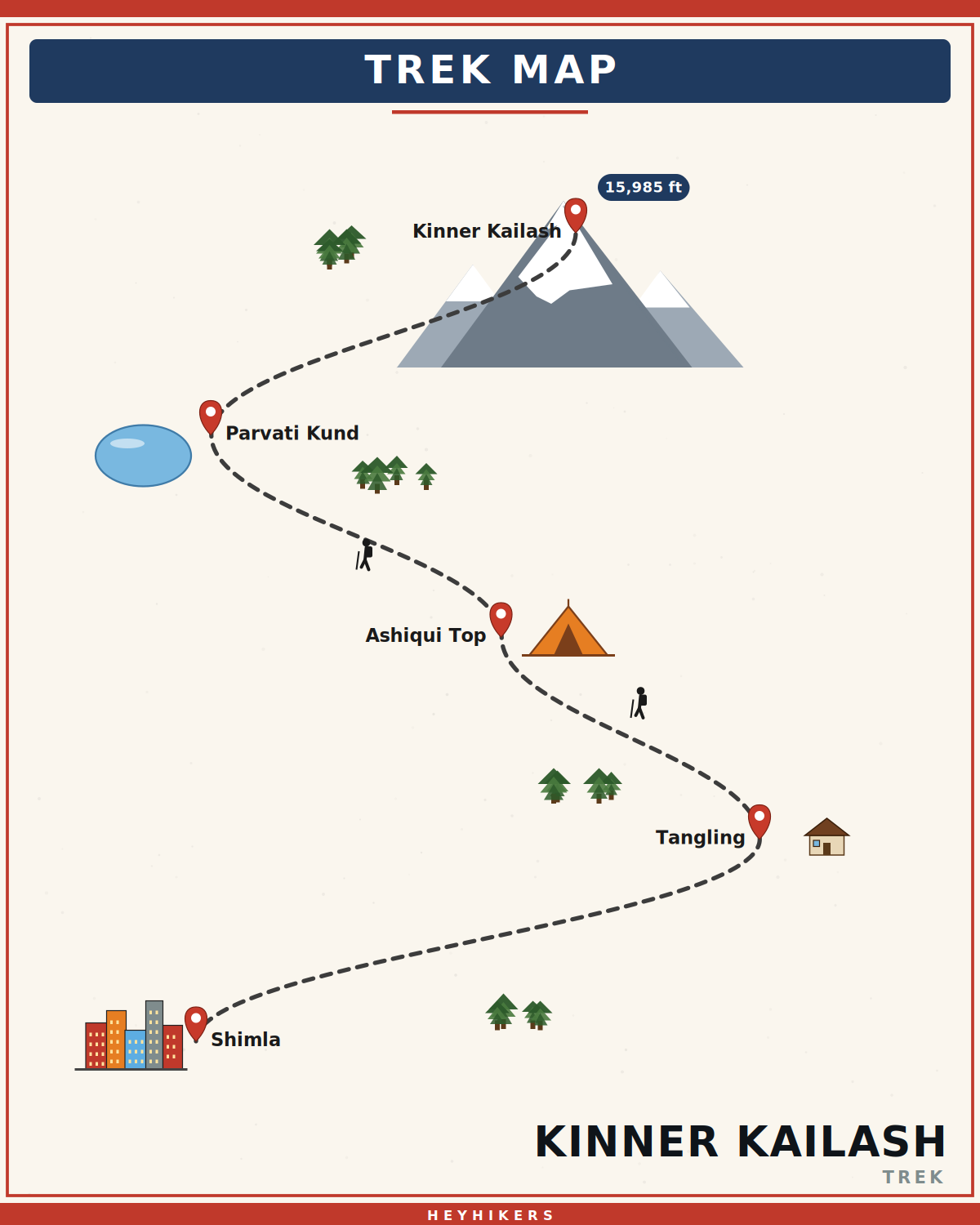
The trek begins at Tangling village (8,200 ft), a small Kinnauri village reached after a 9-hour drive from Shimla up the Sutlej valley. Day 2 climbs 4,000 ft in 6 km through chilgoza pine and deodar forest to Ashiqui Top campsite (12,200 ft) — the steepest day-on-day-one in any 5-day Indian trek. Day 3 emerges from the tree line and climbs to Parvati Kund (14,300 ft), a sacred glacial pond believed to be where Parvati performed her penance to win Shiva. Day 4 is the summit day: a 2 AM start, a steady climb on moraine and scree, an exposed ridge with fixed-rope sections, and the final approach to the lingam at first light. Most trekkers spend 30-40 minutes at the lingam before the long descent — back through Parvati Kund, Ashiqui Top, and all the way down to Tangling. Day 5 is the road return to Shimla.
The summit experience
Reaching the lingam is unlike any other Himalayan summit. The final ridge is exposed and demands focused movement; we use a fixed rope on the most exposed 200 metres. The lingam itself is a striking vertical granite column visible from a kilometre away. At first light the rock turns pink and then gold; pilgrims tie prayer flags, perform a short puja (offering of rice, flowers, and ghee — carried up by the trek leader), and circumambulate the base. The view from the lingam includes the Sutlej valley spread 7,000 ft below, the Kinner Kailash main peak immediately above, and on clear days the distant snows of the Spiti and Pin Parvati ranges.
Difficulty and prerequisites
Kinner Kailash is a graded difficult trek. We require trekkers to have completed at least one trek above 13,000 ft (Hampta Pass, Bhrigu Lake, Buran Ghati, or equivalent) and to demonstrate cardiovascular fitness equivalent to running 5 km in 30 minutes. The trek's combination of steep gradient (4,000 ft/day on Days 2 and 4), exposure (the upper ridge requires fixed-rope work), and altitude (15,985 ft) means it is genuinely strenuous. Anyone with a history of altitude sickness, knee instability, or cardiovascular issues should not attempt this trek without consulting the trek leader.
Best season and weather
Kinner Kailash is open July to mid-September. Earlier than July, the upper ridge holds snow that makes the exposed traverse genuinely dangerous; later than mid-September, the weather window closes as winter storms roll in from the Spiti side. Daytime temperatures range from 15°C in the lower forests to -5°C at Parvati Kund. The Kinnaur region is in partial rain shadow so the monsoon impact is less severe than on the south-facing Parvati or Dhauladhar treks, but afternoon thunderstorms are common in July-August.
Camping and infrastructure
HeyHikers operates tented camps at Ashiqui Top and Parvati Kund with two-person tents, sleeping bags rated to -10°C, and dry food kitchens. Tangling village has a basic homestay where we stay on Day 1 and the night after the summit. The trek is supported by mules to Ashiqui Top and porters above; trekkers carry only daypacks. Microspikes, harnesses, helmets, and fixed ropes are provided for the summit day.
Cultural and historical context
Kinnaur is one of the oldest continuously inhabited regions of the Himalayas, with cultural roots that combine Hindu and Tibetan Buddhist traditions. The Kinnauri people speak Kinnauri (a Sino-Tibetan language) and follow a syncretic religious tradition where Shiva and Buddha are often worshipped at the same temples. The Kinner Kailash pilgrimage predates the present religious labels — local traditions place pilgrims walking to the lingam for at least a thousand years, originally as a regional cult that absorbed Hindu and Buddhist elements over time. The annual Kinner Kailash Yatra in August draws several thousand pilgrims; HeyHikers groups encounter pilgrim parties from Reckong Peo and Sangla on the trail.
Itinerary
Map
What trekkers say
"I'd never camped in snow before. The HeyHikers team made me feel safe every single step. The summit sunrise — standing at 12,500 ft watching peaks turn gold — I cried. Not from the cold. From the beauty."
PS
Priya Sharma
Kedarkantha, Dec 2025
"Seven lakes, each more unreal than the last. The logistics were flawless — the food at 13,000 ft was better than most restaurants I know. Our guide Farooq knew every stone on the trail. Doing Goechala with them next."
AM
Arjun Mehta
Kashmir Great Lakes, Aug 2025
Inclusion
- All meals during the trek (vegetarian, freshly cooked)
- Camping gear — tents, sleeping bags, mats
- Certified trek leader and support guides
- Forest department permits and entry fees
- First-aid kit and supplemental oxygen
- Basecamp accommodation on twin/triple sharing
Exclusion
- Travel to and from the basecamp pickup point
- Personal trekking gear and clothing
- Travel insurance covering high-altitude trekking
- Tips, personal expenses, and meals during travel days
- Anything not explicitly listed under inclusions
Things to Carry
- Trekking shoes (high-ankle, broken-in)
- 40-50L backpack with rain cover
- Two pairs of trek pants
- Three full-sleeve t-shirts (synthetic, not cotton)
- Fleece jacket and a heavier down/insulated jacket
- Thermal innerwear (top + bottom)
- Waterproof outer shell (jacket + pants)
- Woollen cap, sun cap, balaclava
- Two pairs of warm gloves (inner liner + outer)
- UV-rated sunglasses
- Headlamp with spare batteries
- Reusable water bottles (2L total) or hydration bladder
- Personal medical kit and prescription medicines
- Sunscreen (SPF 50+) and lip balm
- Toiletries and quick-dry towel
- Original photo ID (mandatory at forest checkposts)
How to Reach
Reach Shimla via overnight Volvo from Delhi or by toy train from Kalka. Our shared transport leaves at 6:00 AM on Day 1 and reaches Tangling village in 9 hours via Rampur and Reckong Peo.
Safety & Security
- Acclimatize properly — never skip rest days at altitude.
- Drink at least 4 litres of water per day above 9,000 ft.
- Tell your trek leader immediately if you feel headache, nausea, or breathlessness — early AMS signs are treatable, ignored ones are not.
- Stay close to the group; do not take shortcuts off the marked trail.
- Avoid alcohol and smoking for the entire duration of the trek.
- Keep a buffer day for travel — Himalayan roads can close without notice.
- Carry travel insurance that explicitly covers high-altitude trekking and helicopter evacuation.
Cancellation Policy
Cancellations must be requested in writing.
- More than 30 days before the trek start date: 90% refund. - 21–30 days before: 50% refund. - 11–20 days before: 25% refund. - 10 days or fewer: no refund, but you may transfer your slot to another trekker or to any future batch within 12 months at no extra charge.
Refunds are processed to the original payment method within 7-10 working days. Trip cancellations triggered by us (weather, force majeure, government restrictions) are refunded in full or moved to an alternate batch at your option.
Meet your trek leader
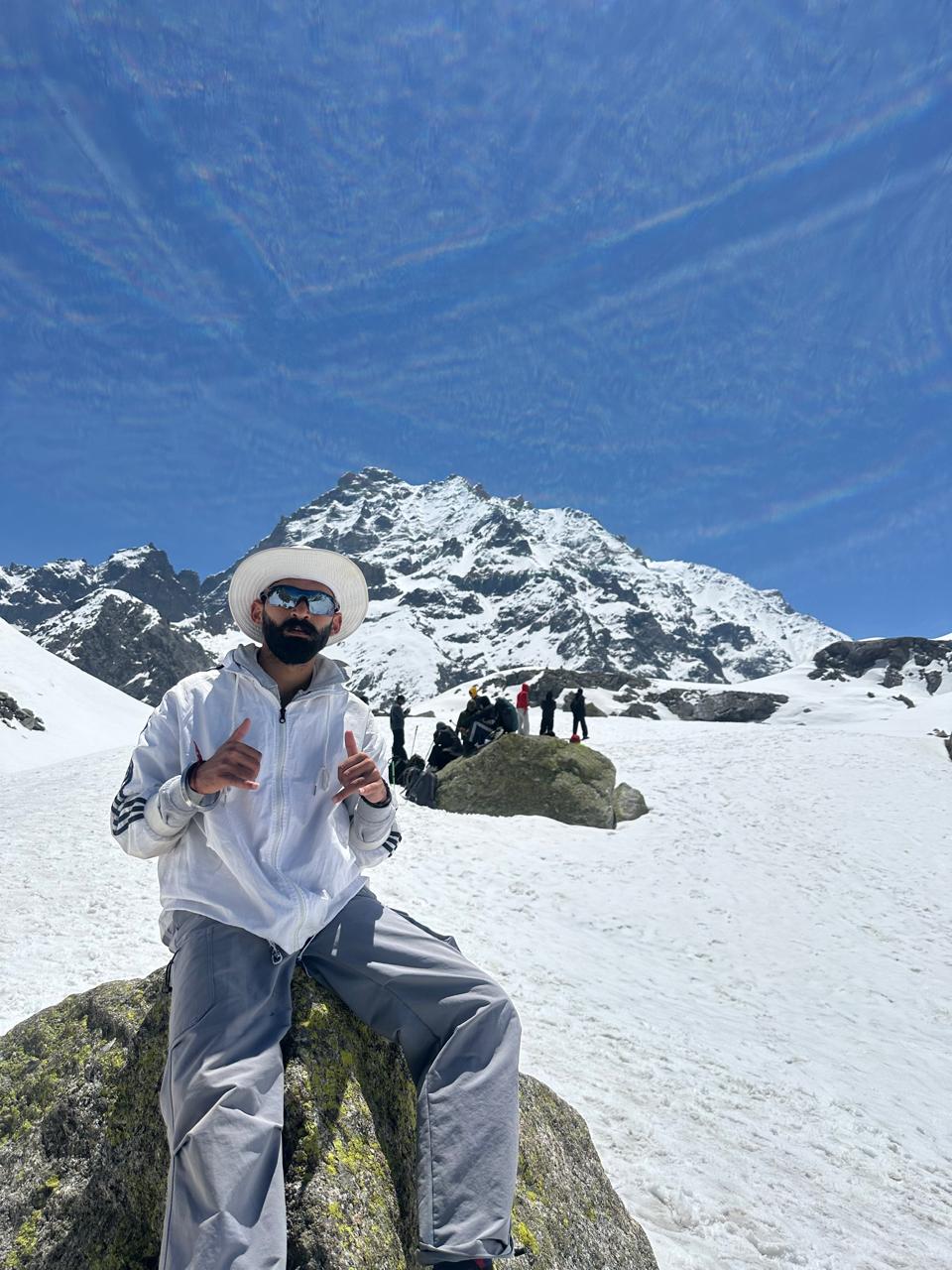
Akhil Deruwan
NIM Uttarkashi certified · 9 yrs experience
Akhil grew up in the foothills of the Garhwal Himalayas and has spent nearly a decade navigating its most demanding trails. He has led over 150 batches across Uttarakhand and Himachal Pradesh, with a strong focus on technical high-altitude routes and safety management. His calm under pressure and deep knowledge of local terrain make him a trusted leader for both beginner and advanced trekkers.
- Wilderness First Responder
- High Altitude Medicine
- Technical Route Navigation
- Search & Rescue
FAQ
Why Trek With Us
Travel Safe
Certified Team
Easy Cancellation
Well Equipped Campsite
Experienced Guide
No Hidden Charges