Overview
Tarsar Marsar — Kashmir's Secret Twin Lakes
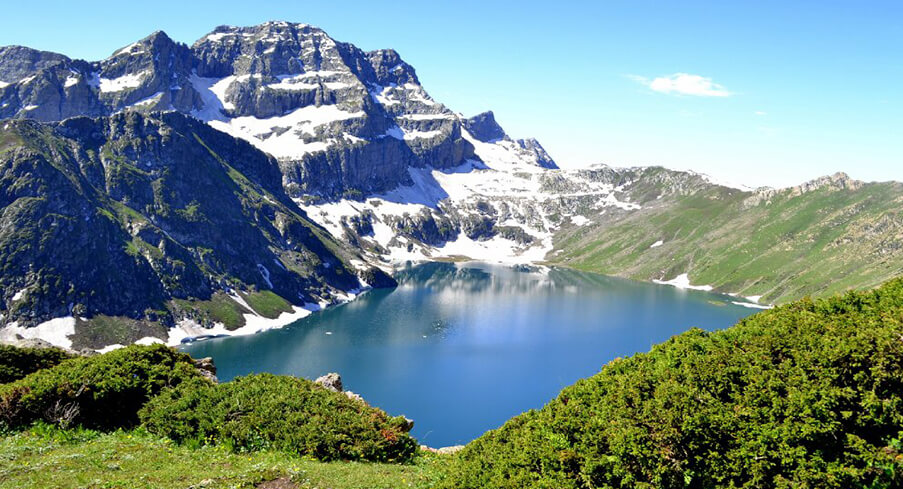
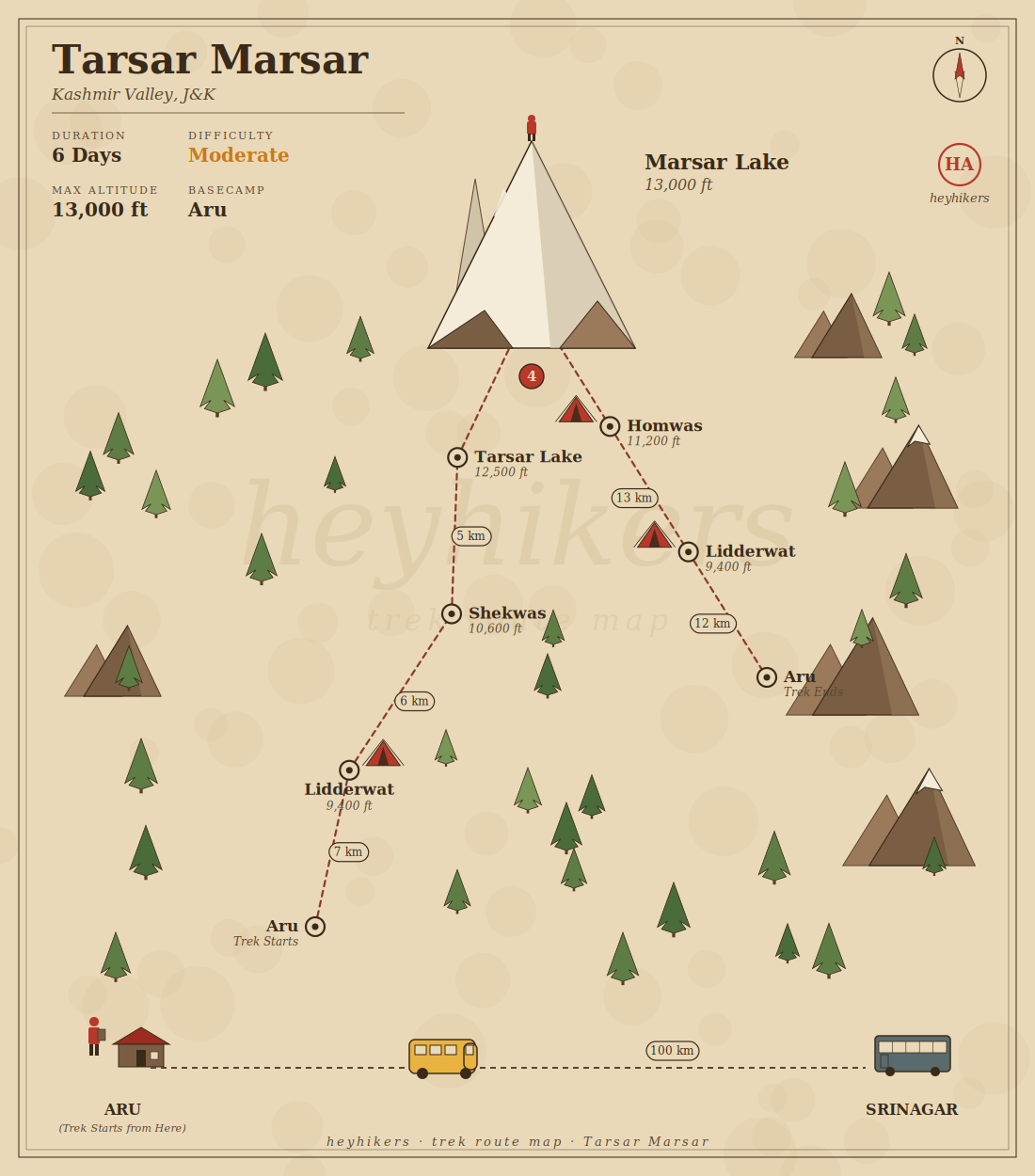
Tarsar Marsar is one of the finest short treks in the entire Kashmir Himalayas — a six-day loop from Aru Valley near Pahalgam that visits two contrasting alpine lakes hidden in a cirque above the Lidder Valley. Tarsar (12,500 ft) is turquoise, calm, and surrounded by steep green walls; Marsar (13,000 ft), a short climb above, is darker, wilder, and fed by permanent snowfields. The approach through the Lidder Valley is one of the most beautiful forest and meadow walks in Kashmir, passing Gujjar herdsmen's summer camps and wildflower meadows rivalling the valley-of-flowers plateau.
Why choose Tarsar Marsar over Kashmir Great Lakes?
Tarsar Marsar is shorter (6 vs 7 days), less crowded, and more focused — every day builds toward the climax of the twin lakes on Days 3 and 4. Where Kashmir Great Lakes is a high-passes traverse, Tarsar Marsar is an intimate cirque trek. Photographers often prefer Tarsar Marsar for the tight framing of the Tarsar bowl. It pairs naturally with a visit to Pahalgam before or after the trek.
Best season
Mid-July to mid-September. Snow clears from the Tarsar headwall by late June in most years but the trail to Marsar can hold steep snow sections until mid-July. August is peak season with full wildflower bloom. September brings clarity and cool temperatures — excellent for photography.
Fitness and experience
Graded moderate. Day 3 (the Tarsar cirque climb) is steep but short — 1,900 ft in 5 km. Day 4 (Tarsar to Marsar to Homwas) is the hardest day at 10 km with significant elevation change. Prior trekking experience recommended but not mandatory for fit first-timers.
Itinerary
Map
What trekkers say
"I'd never camped in snow before. The HeyHikers team made me feel safe every single step. The summit sunrise — standing at 12,500 ft watching peaks turn gold — I cried. Not from the cold. From the beauty."
PS
Priya Sharma
Kedarkantha, Dec 2025
"Seven lakes, each more unreal than the last. The logistics were flawless — the food at 13,000 ft was better than most restaurants I know. Our guide Farooq knew every stone on the trail. Doing Goechala with them next."
AM
Arjun Mehta
Kashmir Great Lakes, Aug 2025
Inclusion
- All meals during the trek (vegetarian, freshly cooked)
- Camping gear — tents, sleeping bags, mats
- Certified trek leader and support guides
- Pack pony charges for group equipment
- Forest department permits and entry fees
- First-aid kit and supplemental oxygen
- Transport — Srinagar/Pahalgam to Aru and back
Exclusion
- Travel to and from Srinagar or Pahalgam
- Accommodation before/after trek
- Personal trekking gear and clothing
- Travel insurance covering high-altitude trekking
- Tips, personal expenses, and meals during travel days
- Anything not explicitly listed under inclusions
Things to Carry
- Trekking shoes (high-ankle, broken-in)
- 40-50L backpack with rain cover
- Two pairs of trek pants
- Three full-sleeve t-shirts (synthetic, not cotton)
- Fleece jacket and a heavier down/insulated jacket
- Thermal innerwear (top + bottom)
- Waterproof outer shell (jacket + pants)
- Woollen cap, sun cap, balaclava
- Two pairs of warm gloves (inner liner + outer)
- UV-rated sunglasses
- Headlamp with spare batteries
- Reusable water bottles (2L total) or hydration bladder
- Personal medical kit and prescription medicines
- Sunscreen (SPF 50+) and lip balm
- Toiletries and quick-dry towel
- Original photo ID (mandatory at forest checkposts)
How to Reach
Srinagar is the gateway. Fly to Srinagar (SXR) from Delhi, Mumbai, or Bengaluru.
Drive from Srinagar to Pahalgam (90 km, ~3 hours) and onward to Aru Village (11 km, 30 minutes). The trek starts and ends at Aru — we drop you at Pahalgam or Srinagar after the final day's descent.
Pahalgam is well connected to Srinagar by shared taxi (Rs 400/seat) and private cabs. We recommend arriving in Pahalgam the evening before Day 1 to ensure a relaxed morning departure.
Safety & Security
- Acclimatize properly — never skip rest days at altitude.
- Drink at least 4 litres of water per day above 9,000 ft.
- Tell your trek leader immediately if you feel headache, nausea, or breathlessness — early AMS signs are treatable, ignored ones are not.
- Stay close to the group; do not take shortcuts off the marked trail.
- Avoid alcohol and smoking for the entire duration of the trek.
- Keep a buffer day for travel — Himalayan roads can close without notice.
- Carry travel insurance that explicitly covers high-altitude trekking and helicopter evacuation.
Cancellation Policy
Cancellations must be requested in writing.
- More than 30 days before the trek start date: 90% refund. - 21–30 days before: 50% refund. - 11–20 days before: 25% refund. - 10 days or fewer: no refund, but you may transfer your slot to another trekker or to any future batch within 12 months at no extra charge.
Refunds are processed to the original payment method within 7-10 working days. Trip cancellations triggered by us (weather, force majeure, government restrictions) are refunded in full or moved to an alternate batch at your option.
Meet your trek leader
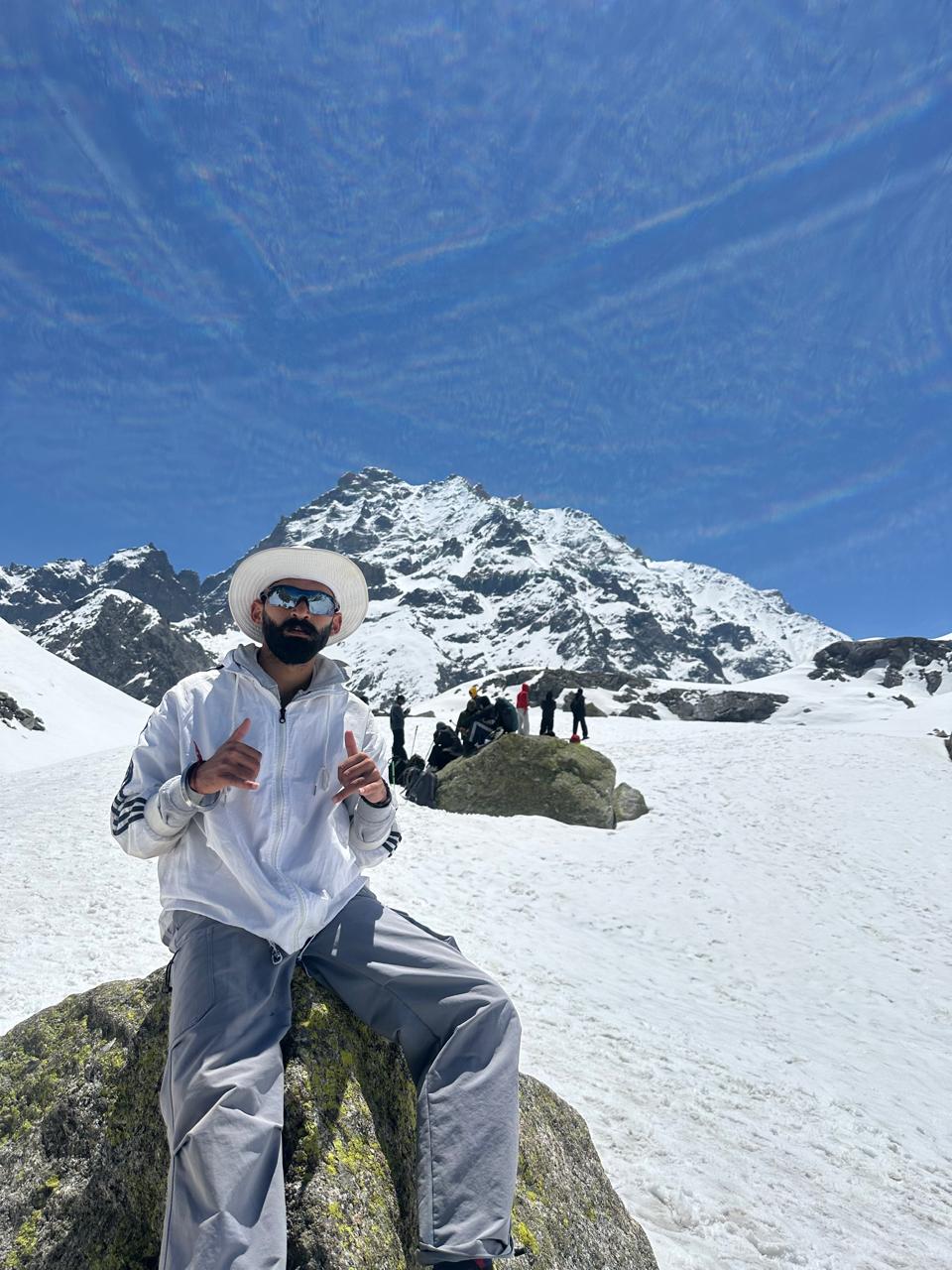
Akhil Deruwan
NIM Uttarkashi certified · 9 yrs experience
Akhil grew up in the foothills of the Garhwal Himalayas and has spent nearly a decade navigating its most demanding trails. He has led over 150 batches across Uttarakhand and Himachal Pradesh, with a strong focus on technical high-altitude routes and safety management. His calm under pressure and deep knowledge of local terrain make him a trusted leader for both beginner and advanced trekkers.
- Wilderness First Responder
- High Altitude Medicine
- Technical Route Navigation
- Search & Rescue
FAQ
Why Trek With Us
Travel Safe
Certified Team
Easy Cancellation
Well Equipped Campsite
Experienced Guide
No Hidden Charges